
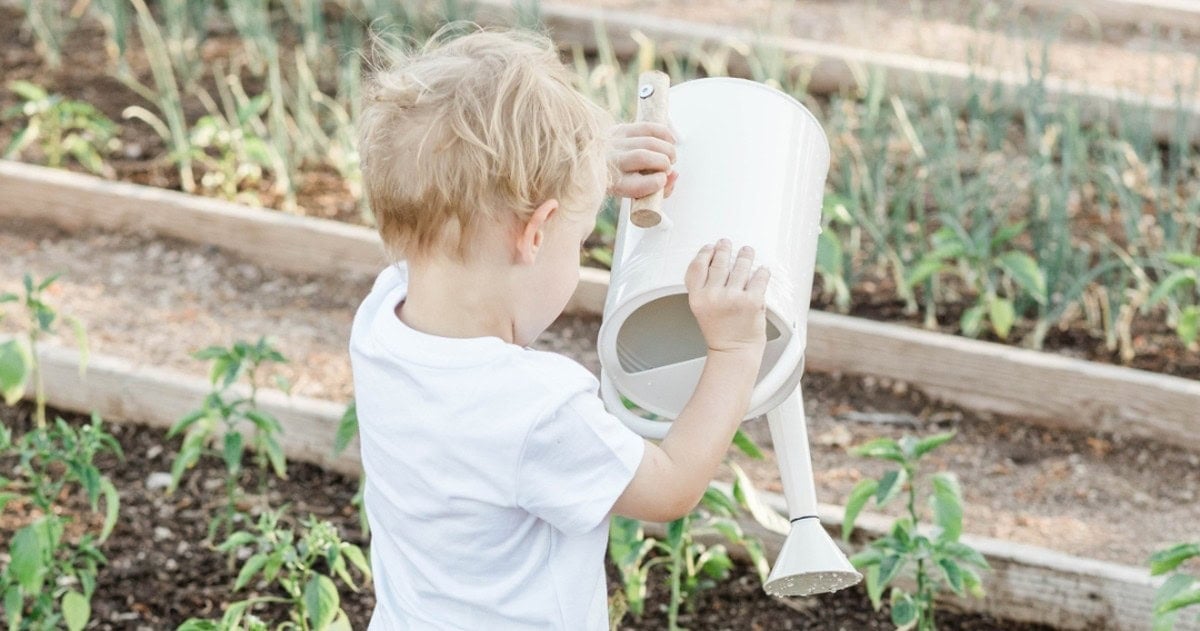


Encouraging toddler independence sounds easy enough, until you try to do it and discover it’s a maddening part of parenthood that no one really prepares you for.
The thing is, we want our kids to be independent. We make ourselves crazy tracking milestones and some of us (no judgment) might have set alerts on our phones to make sure they had enough tummy time as babies. (Modern parenting comes with insane expectations and it’s, well . . . you know.)
But when it comes to actually letting them do things for themselves, be still my panicky heart. Because letting toddlers learn to do things independently takes for-freakin’-ever. It means watching them fail, letting them fuss, and waiting, waiting, and more waiting.
Every time I let my kids put on their own socks, pull on their own pants, or any of the other million “by myselves” they asked for, I cringed. And not a little. Because it takes so long. So. damn. long.
And you know what parenting a toddler does not do to most of us? Give us patience. Quite the opposite; it zaps whatever patience we had. So now, you’re in a time when you know you need to let your toddler practice new things (socks, spoons, zippers), but you’re also already at your wit’s end.
So let’s make a plan together. Keep reading to find easy-to-read charts and doable plans for encouraging toddler independence by age. The cool part? They’re designed to work for the child and the parents. Because I’ve raised two kids through this stage, and I know all-too-well it’s not as easy (or sane) as “let them get themselves dressed now.”

This site contains affiliate links, meaning that we earn a small commission for purchases made through our site. We only recommend products we personally use, love, or have thoroughly vetted.
Toddler Independence At-a-Glance
Want the quick down-low? Here it is. I’ve broken “how to raise independent toddlers” without wanting to go crazy into 5 simple stages.
- Helping, Not Doing (~12–18 months): you do the work but guide them through helping where appropriate
- The Slow-Motion Stage (~18–24 months): they can do it, just at one-quarter speed
- Doing It With, Not For (~2–3 years): they’re often capable now, so every “I’ll just do it” is a choice on your part (and, often, a reasonable one)
- “Me Do It” (~3–4 years): it’s not about the task anymore; it’s about your little one feeling seen as capable
- The Split-the-Difference Stage (~4–5+ years): the skill gap is closing; now it’s about allowing independence where you can and picking your battles
Encouraging Toddler Independence: Why It Matters
You know how waiting for your toddler to do something new makes you feel a little crazy because they can’t get it right and you’re forever waiting? Well, as maddening as it is, that’s actually kinda the point.
You see, every time they try something new, practice a skill, or repeat an experience, pathways in their little brains “fire up.” The more they practice, the more those pathways strengthen, and the better they get at a skill.
But more than the skill itself, it’s really about the bigger picture.
Every sock they pull on? That’s
- Hand-eye coordination
- Fine motor skills
- Sensory development
Every button they can’t clasp is essential fine motor work, and every toddling fall helps them improve balance, coordination, and gross motor skills.
In isolation, each little milestone seems small. But they add to huge results: well-developed kids who can eventually speak, write, play sports or musical instruments, balance their bodies, and so much more.
How to Stay Sane While Raising an Independent Toddler
Here’s where I want to be careful, though. I just gave you really important info, but also, it puts a lot of pressure on you.
And if you’re anything like me, it might mean you feel a smidge of the ever-dreaded mom guilt every time you take over and just put on your kid’s stinkin’ shoe because you need to just get out the door already.
My goal = no guilt. Instead, let’s create a plan we can implement with moderation and sanity.
Got extra time before you leave? Have your toddler get themselves dressed appropriately (and yes, I’ll tell you what’s appropriate by age.)
Rushing out the door? Do it for them and play dress-up some other time so they can “practice” where the fumbling and waiting is just part of the game.
Because we can’t practice every skill all the time. It’s exhausting and leaves everyone frustrated. So when you put on their pajamas instead of making them do it when you’re both exhausted and bedtime’s insane? Cool. I still often do it for my 4.5 year old. Because bedtime isn’t a “worth it” time to me.
In the 5 stages below, I break down:
- What kids can actually do at each age (note: these are ranges; all children are on different timelines)
- How to make it work when it works and toss out the guilt when it doesn’t
- How to support your toddler without pulling out all the hair you recently re-grew after postpartum
Remember, these stages are average ranges for neurotypical kids. It’s all a spectrum. Kids don’t meet milestones at the same time, and that’s okay. Comparing your kid to a classmate or cousin will steal so much joy. (Ask me how I know.)
Your job is simply this:
- Foster independence when it makes sense for your family
- Attend regular pediatrician checkups
- If your little one isn’t meeting your doctor’s milestones, ask for a developmental pediatrician or specialist recommendation, if needed.
Your child is wonderful, and so are you. This ish is hard, but you’re both amazing.
Want to track it? Click here to download the CDC’s mobile app, which allows you to adjust for prematurity.
So tired of tracking things you kind of want to shatter your phone into pieces? Cool. Don’t track! This about learning to do what works for you and your family!
The 5 Stages of Toddler Independence
Stage 1: Helping, Not Doing (~12–18 months)
During this stage, here are some things your toddler might be able to do:
- Hold a cup
- Feed themselves using their tiny fingers
- Trying to use a spoon (emphasis on the word “try”)
- Put hands out for you to wash them
- Push their arms through sleeves or lift their feet to help with dressing
You’re still doing most of the work, while encouraging their participation with praise when it happens.
Simple ways to encourage independence:
- Encourage pretend play
- Let them practice using age-appropriate cups (more below)
- Give them spoons that don’t require wrist flexibility so they can practice
- Let them make simple choices
- “Do you want the green cup or the purple one?”
- “Should we put on this shoe first or that one?”
NoteTantrums happen (maybe from both of you). Messes too. It’s all okay.
Practical Tip: Choosing the Right CupsThis is a stage where you can do simple things like give them cups that are easy to grip to let them practice. It’s also the perfect time to introduce open cups, at first with you holding it, and then eventually with them holding it. (I love these silicon ones for grip, washability, and size!)
Reality Check About the CupsYou probably don’t want a kid this age chilling on your couch with an open cup. For sanity, reserve those for at the table or in a high chair when you can handle the mess, and go with a weighted straw cup at other times to avoid the mess.
Sippy Cup NoteI can tell you from experience, however easy a sippy cup may seem, getting them off of it now will make your life a lot easier. (Says the mom who had a kid on a sippy cup until age 4. Trust me.)
Stage 2: The Slow-Motion Stage (~18–24 months)
This stage can feel extra hard because there’s so much your little one can do. But with a lot of fumbling and mess, and at quarter-speed.
During this stage, here are some things your toddler might be able to do:
- Start using a spoon and fork to feed themselves (it won’t be perfect yet)
- Unzipping zippers
- Taking off clothes like pants, socks, and shoes
- Attempting to brush their own teeth (badly. Gloriously badly.)
- Holding something in one hand while using the other (like trying to take off or put on lids)
- Using buttons/switches/spinners on toys
Simple ways to encourage independence:
- Have play dates and show your child how to interact (sharing, taking turns, using words)
- Don’t expect them to play with another kid yet. They tend to play near each other instead of with each other. That’s great. You’re just teaching and lending opportunities.
- Let them help set their place at the table (no glass, obviously)
- Give them cause-and-effect toys. A few options I love:
- Toddler busy board from Fat Brain Toys (pricey, but worth the splurge)
- Activity table by Melissa & Doug (buy this or the above option, not both)
- Melissa & Doug plush activity book (less expensive & great on-the-go)
- On-the-Go activity board from Fat Brain Toys (smaller version of the top one for a much better price)
Practical Tip: Choosing the Feeding UtensilsThe OXO Tot Training Fork & Spoon are perfect for this age because they’re sized for little hands with curved, nonslip handles, the spoon has a deep bowl, and the fork is built for piercing. If your little one is still struggling with wrist mobility or piercing, the NumNum Spoon Set is a great bridge option (and can be started much earlier.)
| Skill | Realistic age range | Why it’s worth the mess | Natural, or build it in? |
|---|---|---|---|
| Taking off shoes/socks (no fasteners) | ~18–24 months | These are the same small, controlled hand movements that’ll eventually hold a crayon, then a pencil | Usually happens naturally before bath time |
| Unzipping a zipper | ~18–24 months | Builds finger strength and coordination behind buttons and zippers later on | If it’s stressing you out during a rushed exit, save zipper practice for a low-stakes moment, like playing dress-up |
| Attempting to brush teeth (even badly) | ~18–24 months | It’s really about the back-and-forth motion, which is early hand control in disguise | Naturally built into your bedtime routine; let them start, then you finish. |
Stage 3: Doing It With, Not For (~2–3 years)
This is a stage of HUGE growth. Like, Julia Roberts returning to the snobby store with her shopping bag saying, “Big mistake. Big. HUGE.” sort of level.
Your toddler’s abilities will improve drastically each month, and by the end of this phase, there’s a big, maddening thing that’s happening. Mainly, lots of instances where your toddler’s technically capable but doesn’t do much without prompting. Which is exciting and, well . . . remember how frustrated Rachel got every time Ross said, “We were on a break!”? It’s that on repeat.
It’s a different kind of tired than Stage 2’s slow-motion madness, but it’s also something you can actually make choices to simplify ahead of time.
During this stage, here are some things your toddler might be able to do:
- Feed themselves a full meal (with a little spilling and real fork usage)
- Take off their own shoes and clothes
- Put on some clothes by themselves (jackets, loose pants)
- Wipe their own face
- Start using the toilet with your help
- Hand you their cup to pour (small self-pours start creeping in closer to 3)
- Strings items together (hey Cheerio necklaces!)
Simple ways to encourage independence:
- Play counting games (like counting body parts, plates on the table, etc.)
- Give them simple tasks like washing fruits and vegetables using a Montessori stool
- Put snacks where they can reach them to allow them to get their own
- Practice simple 2-3 step instructions
- “Go to the bathroom and get your toothbrush and toothpaste”
- “Go to the door and get your shoes and socks”
Practical Tip to Make Independence ReachableMove kid-friendly snacks to a low shelf or drawer, and if your pantry has a lock on it, unlock it. If you’re working on having them pour their own drinks, snag a small, kid-sized pitcher that makes self-pouring realistic instead of a two-hands-and-a-prayer situation.
Reality Check About Snack ShelvesYes, they’ll eat more snacks than you’d like some days. But also, they’ll feed themselves, and you’ll get out of a lot of battles because you’ve given them control over something they used to have to ask for.
| Skill | Realistic age range | Why it’s worth the mess | Natural, or build it in? |
|---|---|---|---|
| Handing you the cup to pour | ~2 years | The starting point for the exact hand control they’ll need to pour on their own later | Naturally built into every snack and meal |
| Small self-pours | ~3 years | Real practice for grip strength and controlling their movement | You’ll probably have to plan this one, but you can put a toddler pitcher on the table at meal times. |
| Mostly independent pouring | ~4 years | The payoff of two years of spilled milk = SO worth it | They aren’t here yet, but since we’re talking about small self-pours, I want to clarify when this skill often develops |
| Getting their own snack | ~2–3 years | Builds decision-making skills and confidence | Move snacks to a reachable shelf or drawer; this is 100% a build-it-in fix, not a wait-it-out one |
Stage 4: “Me Do It” (~3–4 years)
Phwew. You heard about the terrible twos, yes? But did anyone tell you about threenagers or kids who are what I like to call “4mazing”? I don’t say this to scare you, but to remind you of an important point.
This is the age of boundary pushing, wanting to feel capable, and desperately needing to feel like they have control over something. So decide what you’ll let them do, what the boundaries are, and be as consistent as your sanity can allow.
Bottom line: your little one wants to feel capable. Every time they cry, “Me do it,” they’re testing whether you’ll let them be the kind of person who does things, or whether you’ll quietly take over. That’s much bigger than who puts on the dang socks. (And much more infuriating since they’ll probably refuse to put on the socks as often as they’ll insist on doing it themselves when you’re in a hurry.)
During this stage, here are some things your preschooler might be able to do:
- Dress and undress themselves, except for tricky fasteners
- Brush their teeth with supervision (we do parents brush at night; kids brush in the morning)
- Manage large buttons
- Use the toilet independently during the day (nighttime dryness often comes later, and that’s normal too)
- Starts carrying their own plate to the sink
Simple ways to encourage independence:
- Let them be a “helper.” They crave knowing you trust them to help.
- Think setting the table and washing dishes (safe items), handing you laundry that you fold, moving laundry from the washer to the dryer, letting them wipe up messes or use a small vacuum.
- Encourage “using their words” and role play conflict resolution. This may not sound that connected to independence, but the first time you have a play date where you can hang with the parents while the kids play independently, you’ll realize what an amazing skill you’ve helped them foster.
- Redirect and give choices. They’re craving control, so instead of “You can’t jump off that,” redirect with another choice. “It’s not safe to jump off that. Let’s go play in the kitchen. Would you rather color or play a game?”
- Encourage imaginative play. It’s great for social/emotional development, but it also means things like dress-up, which means dressing and undressing without the stress of getting out the door quickly.
- Let them practice basic skills like buttons, zippers, snaps, buckles, and ties with Melissa & Doug’s Basic Skills Activity Board
Practical Tip to Set Up for Success, Not StrugglePut a Montessori stool in the kitchen and a small, sturdy step stool in the bathroom. These remove a whole category of “I can’t reach it” frustration that has nothing to do with willingness.
Warning: This is when they fight for control if we don’t give it to them.
Storytime real quick. I want to tell you this to help bring home the point about how desperately kids this age crave control.
When Branham was a young 3, her preschool class had a bathroom attached to the room. All kids went potty right before nap, after which the bathroom “closed” for nap time. (Reasonable, btw. This is a stage where kids need real boundaries, and her teachers gave them. Otherwise, no one would’ve slept because they’d have used needing to go potty as an excuse. Been there.)
The problem: Branham didn’t nap, and she had no control over what she did during nap time. She wanted her teachers to let her do something else instead, but they said no toys because all the kids would’ve wanted toys.
Enter, power struggle. One day, Branham didn’t pee before nap (on purpose.) Then, mid-nap time, she asked to go potty, already knowing the answer would be no. When told the bathroom was closed, my little threenager walked back to her mat, spread her legs, looked her teacher dead in the eye, and peed.
Then she smiled, legit smiled, and said “Ooops. I had a potty accident. Guess you clean that up.” That girl. Just, wow.
The point: it was never about the potty. In a stage where our little ones are actively seeking control, and we have to pick our battles about when and how to give it to them, or we end up with a 3-year-old standing in a puddle just to prove a point.
| Skill | Realistic age range | Why it’s worth the mess | Natural, or build it in? |
|---|---|---|---|
| Dressing/undressing (minus fasteners) | ~3–4 years | Builds the coordination they’ll need for buttons, zippers, and shoelaces down the line | Naturally happens every morning and night; consider laying clothes out the night before if mornings feel too rushed |
| Independent toileting | ~3–4 years | Real bodily autonomy; this is as much about control as it is about the physical skill | Mostly natural by this point for daytime; if full training lands closer to 4 instead of 3, that’s still right on time. Nighttime dryness usually comes later. Battles here are more often about control than capability. |
| Brushing teeth with supervision | ~3–4 years | Repetition builds the motion; supervision protects the actual clean | Built into the existing bedtime and morning routine already |
Stage 5: The Split-the-Difference Stage (~4–5+ years)
By this stage, the physical skill gap has largely closed. They can do a lot, and now it’s about giving them control where you can within boundaries that work for everyone.
You know the tank top isn’t warm enough for 45 degrees, so do you let them wear it or make them change? Everyone’s answer is different.
During this stage, here are some things your preschooler might be able to do:
- Choose their own clothes (with help making weather-appropriate choices)
- Dress themselves fully
- Buttons some buttons
- Zips and unzips
- Put on shoes by themselves (likely can’t tie laces yet)
- Attempt to bathe themselves while supervised
- Help around the house
- Set the table
- Clear the table after a meal
- Carry laundry
- Find lost items
Simple ways to encourage independence:
- Set out two weather-appropriate clothing options for them to choose from, OR
- Arrange closet so they can choose clothes, but only weather-appropriate ones
- Let them brush their teeth in the morning; you brush at night
- Set clear expectations for responsibilities like clearing plates or setting the table
- Ask them to help so they feel needed and capable
- Give them choices within a boundary as often as possible
- Play with Magnatiles (or the less expensive brand, PicassoTiles) to help with imagination, creativity, and improve the fine-motor skills that’ll help them tie shoes, maneuver buttons, etc.
Practical Tips for Clothing Choices (with Boundaries)Instead of full closet access, give them access to a season. Or give two outfit options laid out the night before, both weather-appropriate, both fine by you. Each morning, they get to make real decisions without the 6:45am wardrobe negotiation.
Branham is very much in this stage right now, and she has strong, clear opinions about basically everything.
We have a toothbrushing plan, devised with her dentist: a grownup brushes her teeth at bedtime, and she gets to brush her own in the morning. It gives her real independence and control without putting her actual oral health at risk. Nobody loses.
Practical Tips for Nesting Choices Inside a BoundaryWhat this means: give them choices where the boundary you set isn’t actually up for negotiation. Decide your boundary, and then create options that work within it.
If it’s time to leave the playground, the choice isn’t “leave now or in five minutes.” The leaving is happening regardless.
The choice is:
- One more time on the swing or slide?
- Do you want to walk to the car, or skip?
The boundary is set: we’re leaving. But they still get some control.
| Skill | Realistic age range | Why it’s worth the mess | Natural, or build it in? |
|---|---|---|---|
| Choosing own clothes | ~4–5+ years | Builds real decision-making and a sense of taste and identity, not just dressing mechanics | Naturally happens every morning; use boundaried choices (“this shirt or that one”) if full open-ended choice feels like too much |
| Full independent dressing | ~4–5+ years | The finish line for years of fine motor practice | Built into the morning and night routine already |
| Bathing/grooming with supervision | ~4–5+ years | Real independence with a safety net still in place | Naturally happens at bath time; supervision, not intervention, is the goal here |
Same rule as always: one thing, not everything.
How to Support Independence Without Losing Your Mind
Let me be clear about one last thing here. These tips for building toddler independence are great, but nothing will work every time with every child. Notice what works with yours and do more of that.
That said, there are two specific tools that work across most stages for most kids, though exactly how you implement them will depend on your family, your personality, and your kids.
- Boundaried choices. Determine your boundary, then offer choices inside it. Just like the park explanation above.
- Build skill-building into play. If practicing building a skill doesn’t work in the middle of a rushed moment, you and me both, sister. So build it into play. Here are some simple examples:
- If letting them put on their own shoes makes you insane when you’re racing out the door, put them on for them. Then, make putting on shoes part of a game to go play outside. Or encourage regular dress up. They still practice, and you’re not stressed.
- If letting them clean their own plate is too stressful after dinner when you’re tired, have a tea party on the weekend, or a picnic on the floor. They can practice the same skills at times when you’re not wiped from a busy day.
And remember, start small. This isn’t a test you need to ace. Pick one thing for your kid’s stage and try it this week. Add another when it works.
Think of all the ideas in this article as a menu, not a to-do list.
Toddler Independence FAQ
There’s no single age; independence builds gradually from around 12 months through the preschool years, with most self-care skills (dressing, feeding, toileting) becoming mostly independent somewhere between ages 3 and 5.
Offer real but boundaried choices, build extra time into routines that already exist (like dressing before an outing), and resist stepping in just because a task is slow. Practice, even clumsy practice, is what builds the skill.
Wanting to do things “my way,” insisting on trying a task even when it’s not going well, and resisting help they’d have happily accepted a few months earlier are all normal signs your toddler is entering a new stage of independence.
Yes. Independence isn’t linear, and plenty of toddlers happily do something themselves one day and demand help with the same task the next. That’s a normal part of the process, not a step backward.
The Bottom Line
Encouraging toddler independence is hard and pushes every parent to their limits. Instead of fighting it, find the tactics that work best for your family and run with them.
Remember, not all kids are the same. Try not to compare your child to other kids, or even your own child to themself last week.
Pick the stage that matches where your little one is right now, not where the internet says they should be. Try one thing from it. Let the rest go until you’re ready to add something new.
Some days, encouraging toddler independence will look like a puddle on a nap mat just to prove a point; other days, it’ll look like a 4-year-old calmly choosing her own weird outfit. Both are part of the process. You’re doing great.
Why trust us?
I’ve raised two kids through every one of these five stages, from the golf-cart diaper changes of toddlerhood to the strong-opinioned preschooler standoffs of today. I’ve made every mistake in this article at least once (see: the sippy cup confession), which is exactly why I trust the advice in it.
Every age range and skill milestone here is cross-checked against CDC, HealthyChildren.org (AAP), Johns Hopkins, Cleveland Clinic, and pediatric occupational therapy sources, not guesswork. Medical/developmental claims are sourced and linked directly in the body. Nothing in this article was sponsored. Pinky promise, friend.
Related Articles That Might Interest You
- Chores by age (the natural next step once they can dress and feed themselves)
- Emotional development in toddlers (for when the fight isn’t really about the shoes)
- Confidence-building Montessori activities (more ways to build the same skills, no pressure attached)
- The mental load of motherhood (because the guilt you feel about wanting them to just hurry up deserves its own conversation)