
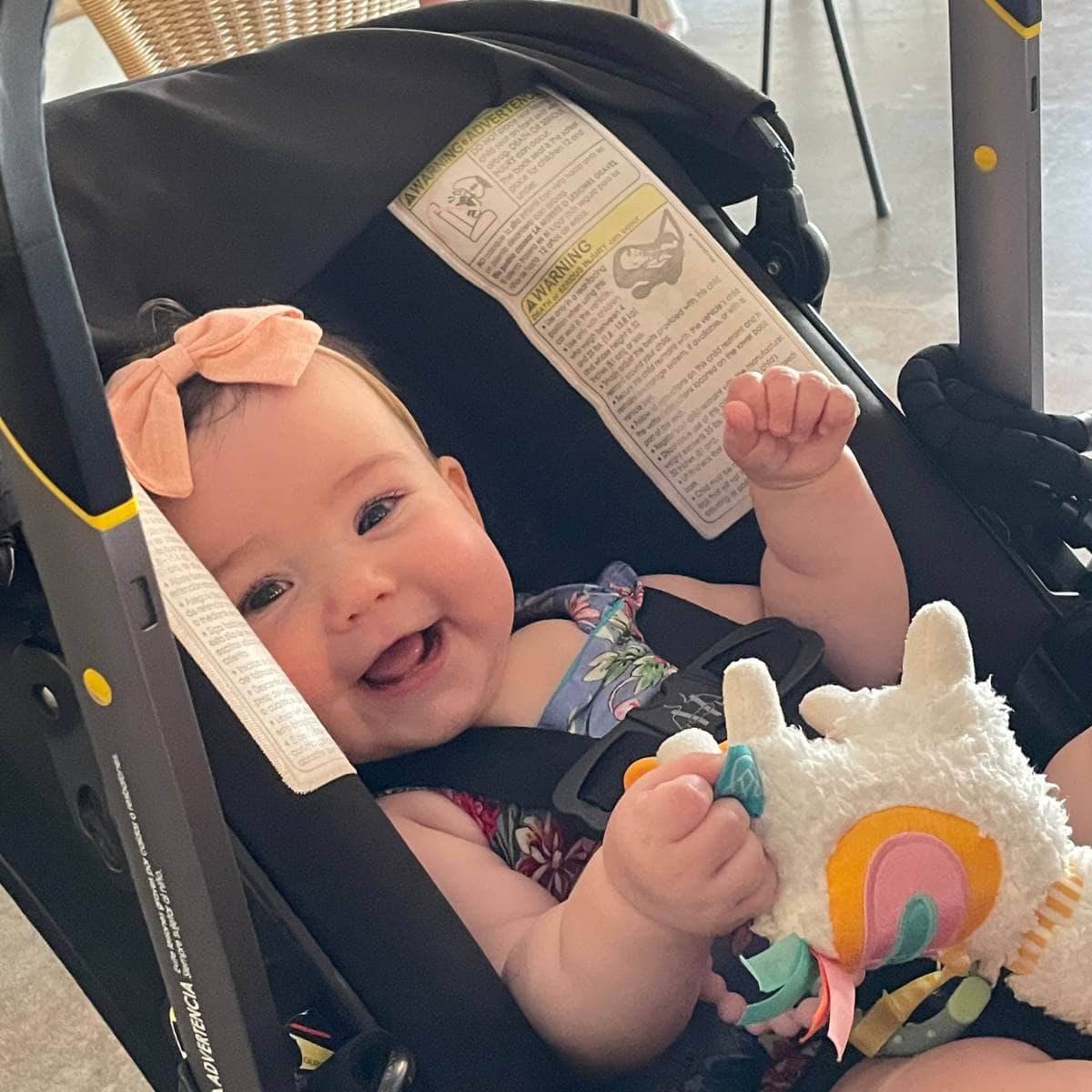
You know that moment when you’re standing at the rental car counter, sleep-deprived and clutching a baby, and the clerk asks if you’d like to add a car seat for $14 a day? And there’s a small, exhausted voice in your head whispering, yes, please, anything, just let me close my eyes for ten seconds?
Been there! I’ve also seen the cabinet that carseat literally fell out and how improperly stored and scratched up every. damn. seat. was. Listen, friend. We need to talk.
Renting a car seat for travel is one of those things that sounds easier than it is, until you actually look at what you’re agreeing to.
I’ve been traveling with a toddler, baby, or booster-aged kid for 9 years now. I’ve taken my kids to 5 different countries and all over the US. I’ve used BabyQuip 30+ times. I’ve packed, gate-checked, gate-broken, and replaced more travel gear than I care to admit. (The good news is, that means I’ve tested A LOT of gear!)
And after all of it, here’s what I want you to know: there’s exactly one rental option I trust, a handful of seats I’d actually buy for travel, and a whole lot of marketing noise to ignore.
So let’s sort it out together.

This site contains affiliate links, meaning that we earn a small commission for purchases made through our site. We only recommend products we personally use, love, or have thoroughly vetted.
The honest answer to “should you rent a car seat for travel?” (Not just the easy one)
Here’s the part nobody at the rental car counter is going to tell you. A car seat’s safety story matters, and the CDC gives clear car seat safety guidelines. Before renting a car seat, you need to know:
- If it’s been in a crash
- If it’s expired (yes, car seats expire, usually 6 to 10 years from the manufacture date, and you can find the date stamped on the seat)
- That it hasn’t been left in a hot trunk for two summers in Phoenix
- That a toddler didn’t spill a juice box in the latches so they’re now unreliable
When you rent a car seat from a rental car counter, you don’t know any of that. The clerk doesn’t know either. It’s a seat:
- From a pile in the back
- Cleaned in the loosest sense of the word (if at all)
And the person handing it to you is paid to move you through the line, not to confirm the seat’s safety (or even fit for your child).
So when I say there’s only one car seat rental option I trust, now you know why.
My one and only car seat rental pick: BabyQuip
BabyQuip works differently than the rental car counter, and the difference is everything. I think of it kinda like Uber for baby gear rental, only the provider is usually a real-life mom running her own small business who actually wants to make my life easier. Hell, yes!
BabyQuip is a North America-wide baby gear rental service that delivers clean, inspected gear straight to your hotel, rental property, or airport. Their "Quality Providers" are real parents running small local businesses who deep-clean every item between rentals and know each seat's full history when renting car seats.
- Real humans cleaning real seats with real accountability
- $1M liability + damage protection if you want it
- Drops off at your door so travel day is just . . . easier
- Each provider is independent, so always check their reviews
- Can be pricey, but often worth it

I’ve used BabyQuip 30+ times. Has every rental been perfect? No. Has every Quality Provider been incredible? Yes, actually.
When BabyQuip is the right call
- It’s available in your family-friendly vacation spot (they’re all across North America)
- You’re flying with a baby or toddler and don’t want to schlep a car seat through 3 terminals
- You’re visiting family for a long weekend and don’t want to install your own seat on day one and uninstall it on day three
- You have to carry a lot onto the plane and you just don’t have room for a seat
- Your seat is tough to install and it’d be easier to use a different one
- You don’t want to carry your seat on a plane and can’t safely check it without voiding its warranty
When you should bring your own seat instead
- Your destination doesn’t have a BabyQuip Quality Provider nearby (check their site before you assume)
- You’re road-tripping and the seat needs to live in the car the whole time
- You already own a seat that’s light, FAA approved, and easy to install (at that point, the math tips toward “just bring it”)
- Your kid has their own seat on the plane, and under 4, they’re safest in a car seat, so why not take one?
- You’re flying with an infant under about 6 months who needs the very specific recline of the seat you’ve already dialed in at home
If you’re in that second camp, which many of you are, let’s talk about the seats actually worth packing.
Travel car seats I actually recommend
When traveling with a baby or toddler, there’s a piece of news you kinda need to know: the FAA recommends children under 40 pounds be in a carseat or approved restraint system for safety. In fact, it takes it a step further than that. Here’s what the FAA has to say:
“The safest place for your child under the age of two on a U.S. airplane is in an approved child restraint system (CRS) or device, not in your lap.”
Federal Aviation Administration
So taking a car seat on the plane is actually the safest option, even if it’s another thing to lug around.
(Plus, once your little one is mobile, it’s also a great way to keep them more comfortable and in their seats for more of the flight. Thank you travel Gods for these small miracles!)
Pro Tips
- Car seats have to be installed in a window seat.
- Not all car seats are FAA approved, so check your model before you fly.
- Skip Spirit Airlines and any seat with an inflatable seatbelt; those can’t accommodate a car seat.
- Bulkhead and premium rows sometimes have fixed armrests or inflatable belts too, so ask when you book.
There’s a lot of talk out there about travel car seats, so here’s the quick comparison of my top picks before we dig into each one.
Infant car seats for travel (baseless install)
| Seat | Price | Weight | Width | Depth | Height limit | FAA |
|---|---|---|---|---|---|---|
| Graco GoMax | $$ | 10.9 lbs | 17.5″ | ~18″ | 32″ | Yes |
| Joie Mint Latch | $$ | 9.3 lbs | 17-17.75″ | ~25″ | 30″ | Yes |
| Nuna PIPA urbn (Flex System) | $$$$ | 7 lbs | 17.5″ | 25″ | 29″ | Yes |
Toddler and bigger-kid travel seats
| Seat | Price | Weight | Folds? | Range | FAA |
|---|---|---|---|---|---|
| Cosco Scenera Extend | $ | 8.5 lbs | No | RF 5-40 lbs / FF 30-50 lbs (1+ yr) | Yes |
| Wayb Pico | $$$ | 8 lbs | Yes (fits overhead) | 2-5 yrs / 22-50 lbs | Yes |
| Peg Perego Viaggio Flex 120 | $$ | 14.8 lbs | Yes (fits overhead) | 4-8 yrs / 40-120 lbs | No (boosters never are) |
Infant seat picks (under ~30 lbs)
1. Best Baseless Infant Seat: Graco GoMax
Listen. After testing the baseless infant seats currently on the market, the GoMax quietly does more for less money than just about anything else out there. It’s the easiest to install and level. And it’s narrower front-to-back than the Joie, which matters a lot when you’re standing in a rental-car lot in Sicily staring worriedly at the Fiat they have waiting on you.
Rigid-LATCH baseless infant car seat with a side bubble level that makes installs nearly idiot-proof.
FAA approved, 10.9 lbs, 17.5″ wide, fits up to 30 lbs / 32″. One of the most travel-friendly baseless seats out there.
- Best price for quality
- Bubble level makes installs feel idiot-proof
- Shorter front-to-back depth so small cars don't punish you
- A pound and a half heavier than the Joie (your arm will know if you carry it through an airport)
- No extended canopy for sunny nap times

You can install it on most domestic flights with the aircraft lap belt through the belt path.
- Window seat
- Armrest up
- Snug install
- Level line confirmed
That’s the whole drill.
2. Lightest Weight Baseless: Joie Mint Latch
This is the seat I reach for when the airport schlep is the hardest part of the day or I know we’ll spend a lot of time in the sun. It’s the lightest carry, and the extendable UPF 50+ canopy is the kind of thing you don’t appreciate until you need your baby to nap and, instead, they’re squinting up at you with serious accusations, screams at the ready.
The lightest baseless infant seat I've used at 9.3 lbs, with an extendable UPF 50+ canopy you'll appreciate at sunny gates.
FAA approved, 17-17.75″ wide, fits up to 30 lbs / 30″. Deeper front-to-back than the Graco, so worth knowing if you're driving a small car.
- Lightest weight of the baseless picks
- Extendable UPF 50+ canopy with a mesh peekaboo window
- Crash-tested to the new FMVSS 213a + 213b side-impact standards
- ~25 inches deep, eats SERIOUS legroom in small cars
- Level line's harder to read than Graco's bubble level

Two honest heads-up.
- It’s deeper front-to-back than the Graco at ~25 inches. Totally fine in a car with space between the front and back seats, but a VERY tight squeeze in small cars.
- Many parents find the level line harder to read than Graco’s bubble level.
That’s why the Graco is my #1 pick. But if those things don’t impact you and you want a lighter carry, go with the Joie!
3. Full Travel System: Nuna PIPA urbn Flex System
If you’ve already drunk the Nuna Kool-Aid (no judgment AT ALL; their stuff is legit), this is the travel system that actually earns the airfare. An easy-to-install seat + a tiny foldable stroller the seat pops right into = heaven when traveling with an infant.
A travel system pairing the 7-lb PIPA urbn infant seat (with rigid LATCH installation, no base ever needed) with the Flex stroller frame.
FAA certified, GREENGUARD Gold.
Fits 4-30 lbs and 16-29 inches.
- 7-lb car seat with rigid LATCH, no base needed (ever)
- FAA certified + GREENGUARD Gold
- Stroller and seat in one purchase, built for actual travel
- Pricey for infant system
- Only sold as bundle
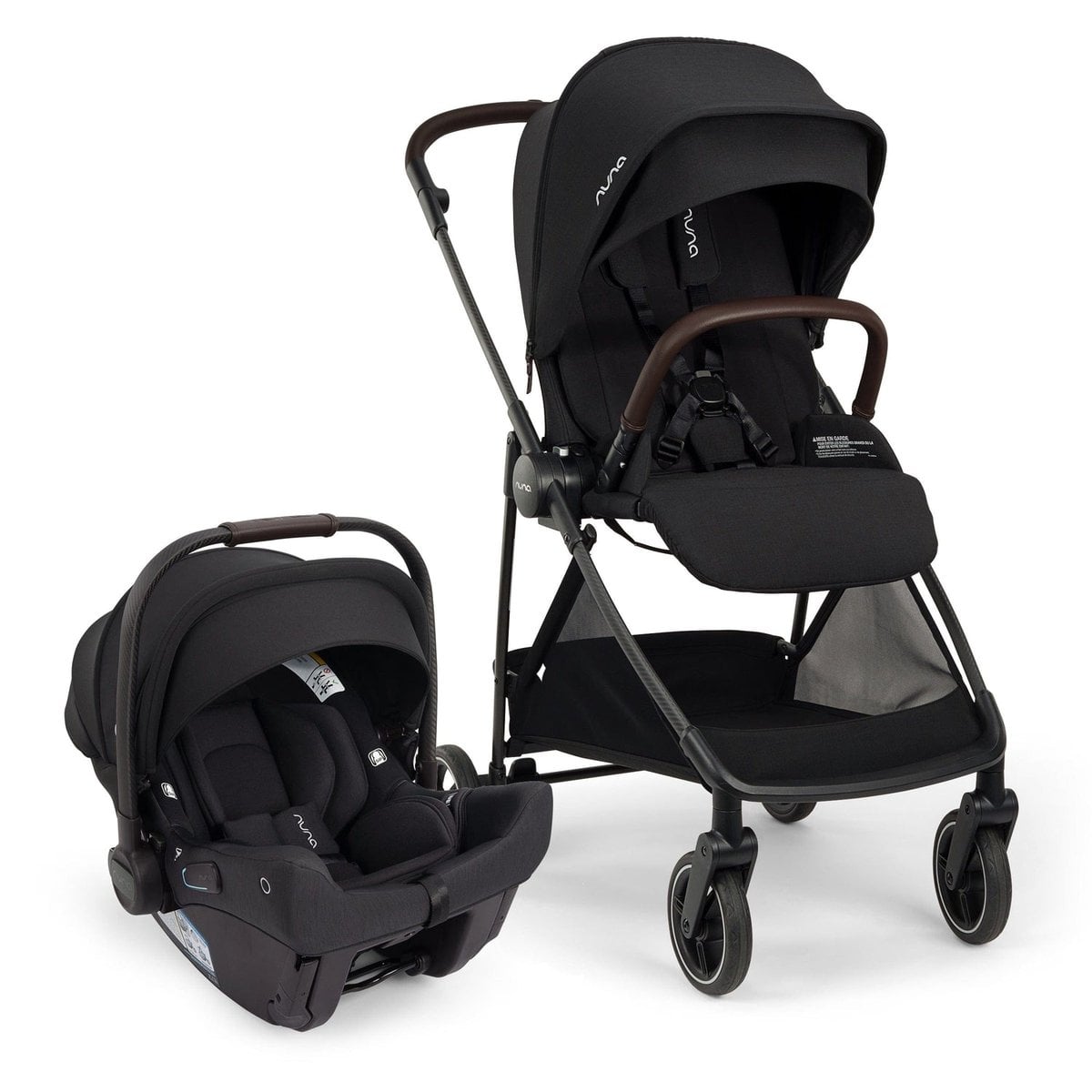
The features I’m crazy about:
- Full-coverage extendable 50+ UPF shade PLUS flip-out eye shade (this is the luxury of luxury, my friend)
- Extra-large peekaboo window
- Stroller folds with the car seat ring attached
- Stroller stands when folded (HUGE when traveling. Big. HUGE. Said in a Julia Roberts Pretty Woman voice.)
Toddler and bigger-kid travel seats
Bigger kids need seats too, and if you’re taking a child under 4 on a plane, having a seat to install is worth a ton. Here are my top picks for different sizes and budgets.
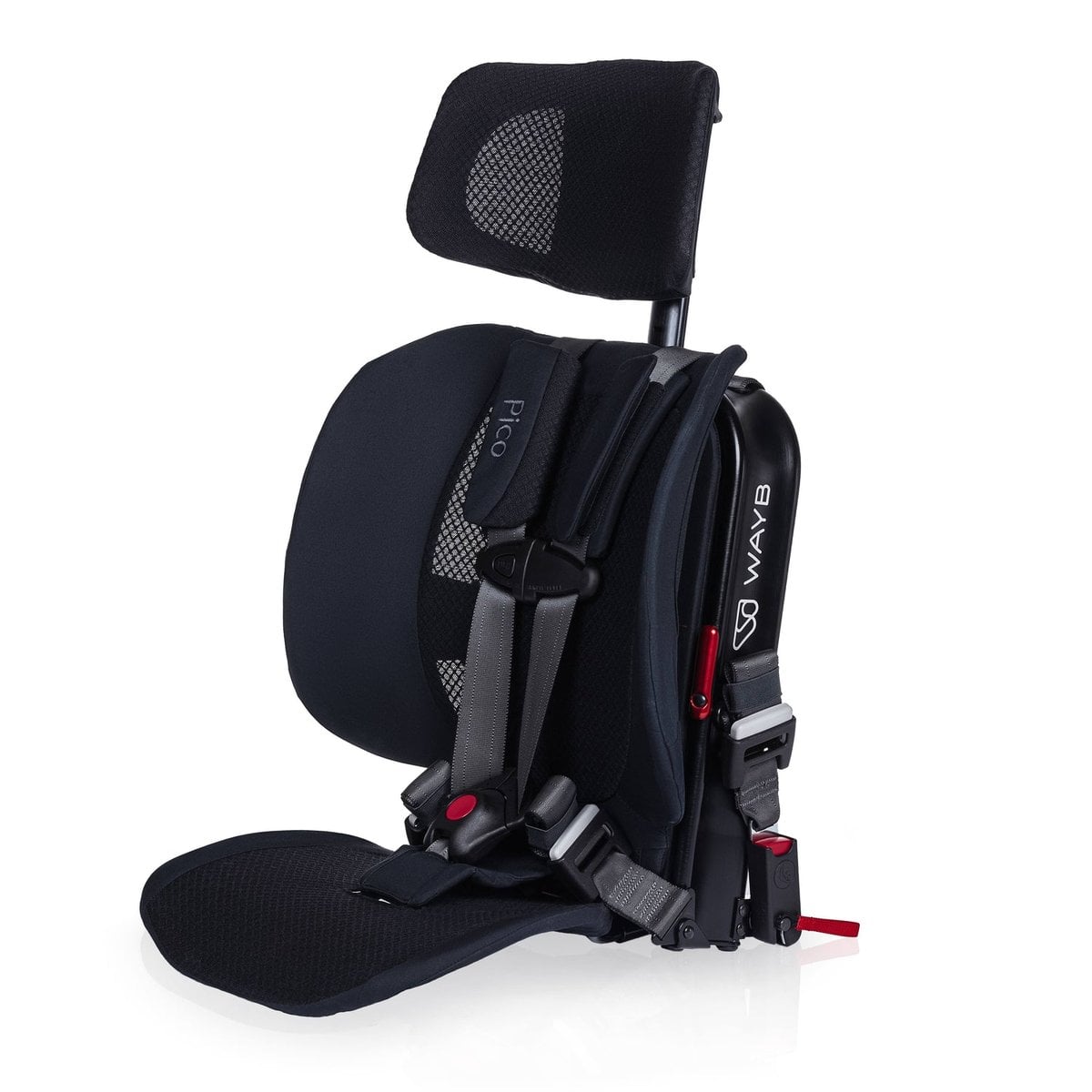
1. Gold Standard Favorite: Wayb Pico
If it’s in budget, this is the one for any child who’s ready to forward face. Like, I cannot express my love for this seat enough; it’s actually become our primary seat for Branham in my husband’s tiny car!
It looks different from most car seats but is just as safe, thanks to its build using aerospace-grade aluminum.
8 lbs of aerospace-grade aluminum that folds to fit in most overhead bins.
Super easy to install on a plane. FAA and NHTSA approved, forward-facing only.
26.5-50 lbs and 33.5-45″ tall.
Strict 2-year minimum. The dedicated carry bag (sold separately or bundled) has backpack straps plus a trolley strap, so carry it on your back or sit it on top of a roller suitcase.
- Folds to 12" x 14.5" x 19" and fits most overhead bins
- 8 pounds total, the lightest forward-facing seat on the market
- FAA + NHTSA approved, 7-year lifespan
- Strict 2+ age minimum (please don't try to bend this one)
- Pricey
How to decide if the Pico’s worth the price:
- You travel multiple times per year
- You have (or plan to have) other kids who can use it later
- You want to use it as one of your primary seats at home and for travel
2. Best Budget Option: Cosco Scenera Extend
I won’t pretend it’s the most gorgeous or luxurious seat on the market, but it’s affordable, EXTREMELY lightweight, and lasts a long time. The lap-belt install on a plane takes me about 90 seconds, though I’ll admit it’s harder to get as snug as other seats.
A few real-life specifics. The Scenera Extend rear-faces from 5 to 40 pounds and forward-faces from 30 to 50 pounds (with a 1+ year minimum to turn forward-facing, in line with current AAP guidance).
Lightweight, inexpensive, and FAA approved.
At 8.5 lbs, it fits in a backpack-style gate-check bag, and the lap-belt install on a plane takes about 90 seconds.
Technically works for infants, but honestly best once baby has graduated from an infant carrier.
- Lowest price out there for a real convertible seat
- Easily fits in a backpack-style gate-check bag
- Rear-faces to 40 lbs, forward-faces to 50 lbs
- No bells, no whistles, no thrills
- No recline indicator; uses a printed line
- Requires more attention to install

The top harness slot is 13.5 inches, which means most kids actually outgrow it rear-facing around age 2 by height, not by weight. That’s normal for budget convertibles. It’s not a flaw; just something to plan for.
Note: It doesn’t feel nearly as sturdy as many of the seats you’re used to, and that’s part of why it’s so lightweight. But it’s met all the same NHSTA crash-test standards, and you can feel good about choosing it!
3. Foldable Booster: Peg Perego Viaggio Flex 120
Once your kid graduates from a harness (and they will, despite your best efforts to keep them little), the Flex 120 grows with them from 40 to 120 pounds. (I actually love this as a next step after the Wayb Pico; when they outgrow the Pico at 50lbs, they can keep using this dude for a LONG time!)
A high-back booster that folds to carry-on size for travel and narrows to 14″ at the base to fit 3-across carseats.
40-120 lbs, 12-year lifespan, machine-washable cover.
Not FAA approved (no booster ever is) but rigid LATCH and recline make it road-trip gold.
- One of the best boosters for 3-across cars
- 12-year lifespan (beats most boosters by years)
- Cover comes off for the wash after sticky-snack incidents
- Heavy to schlep through an airport

It’s also designed for 3-across situations, which is a small miracle if you’re trying to wedge three car seats across the back of a rented sedan in Costa Rica.
You can’t take it on a plane, but by 40lbs, you don’t actually need a carseat on a plane, and it folds so small you can put it in the overhead bin or gate check it.
The travel accessories that earn their place
Roll, don’t carry: car seat travel carts
Let’s be real: when you’re traveling with littles, carrying all their stuff through the airport is overwhelming enough to make us all want to spontaneously combust. That’s honestly the reason most parents don’t install car seats on planes, even though it’s safest. They just can’t add it to the load they pull through the airport. And I feel that deep in my bones.
But what if you could roll the carseat with your child riding comfortably and safely? Then, you could drop the stroller and rent at your destination. Or you could take a super light travel stroller that fits over your shoulder and never have to open, close, and maneuver a little one in-and-out through the airport. I’m sold.
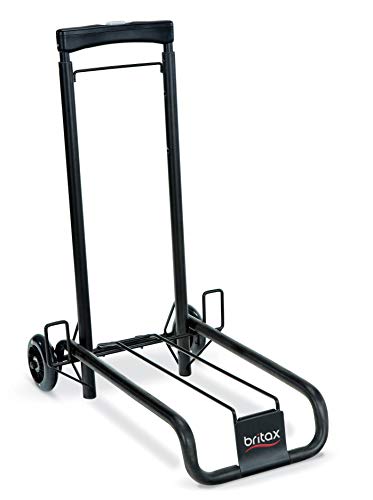
Two carts are worth your money; I recommend the Travelmate for most families, and the Britax cart if you’re routinely traveling with heavier convertible seats.
Universal-fit car seat dolly with a ratcheting quick-release strap that threads through the seat's belt path. No LATCH needed, so it works with most convertible and toddler car seats and doesn't interfere with the seat's own connectors.
5 lbs, pop-off wheels, holds up to 100 lbs combined seat + child weight so you can roll your kiddo through the airport in their car seat.
The cart most well-traveled parents reach for.
- 5 pounds, the lightest cart we tested
- Strap system fits most car seats
- Quick-release wheels for tight spaces
- Telescoping handle can feel wobbly under heavier seats
- Max weight: 100lbs
- Sells out around school breaks, so order ahead

Folds flat for travel and uses LATCH connectors to clip onto compatible Britax forward-facing convertibles and ClickTight seats. Works with almost any seat with a latch system.
Holds up to 200 lbs combined seat + child weight (the highest cap of any travel cart on the market), so it's the right pick if you're hauling a heavier convertible while rolling a bigger kid through long terminals.
Once you know the install, LATCH is faster than a strap system. Perfect for families already in the Britax ecosystem.
- 1-hand telescoping handle
- Fits most overhead bins
- Trusted brand
- Pricey for one-time travel
- Some parents complain latch attachment is tricky
Can you check a car seat at the airport?
It depends, but these can help.
Here’s the deal. If you want to check your seat before going through the security line (called cargo checking), it’s free, which is awesome. It also risks damaging your seat, making it less safe, and voiding its warranty. And that’s, well, not awesome.
Some manufacturers say never, some say “only in the original box,” and some make brand-specific travel bags with damage coverage attached. (Always check your seat’s manual before you decide.)
If you do want to cargo check and not have to carry a box around, some brands do make bags for that.
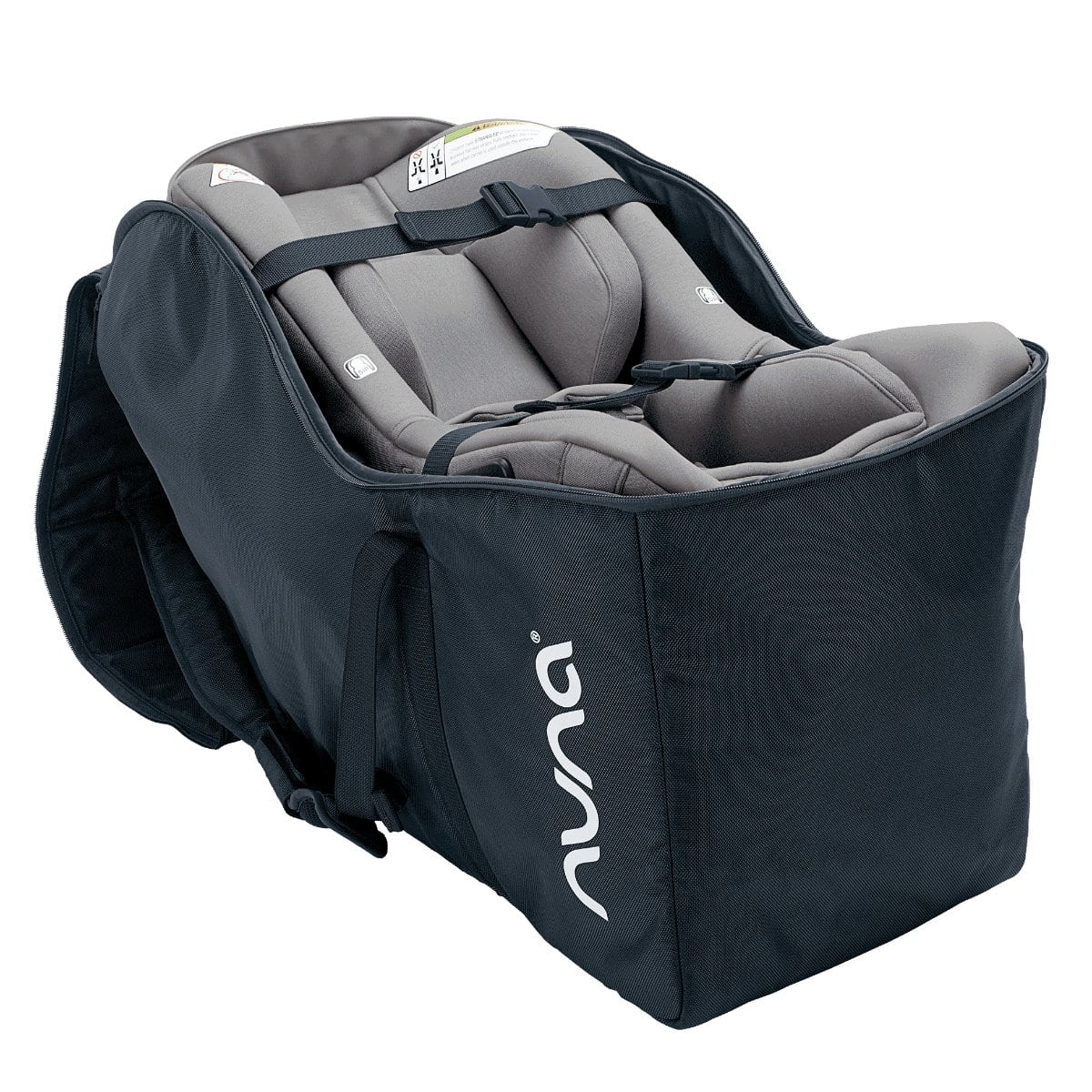
Brand-specific travel bag built for any PIPA seat + base combination.
36″ x 18″ x 20″, under 3 lbs, with inner straps that hold the seat secure during transit.
Cargo check allowed!
- Built specifically for PIPA series seats + base together
- Warranty covers damage to bag or seat (must register both before travel)
- Worth it only if you own a PIPA
- Only 1-year warranty
- Outgrow the infant seat; outgrow the bag
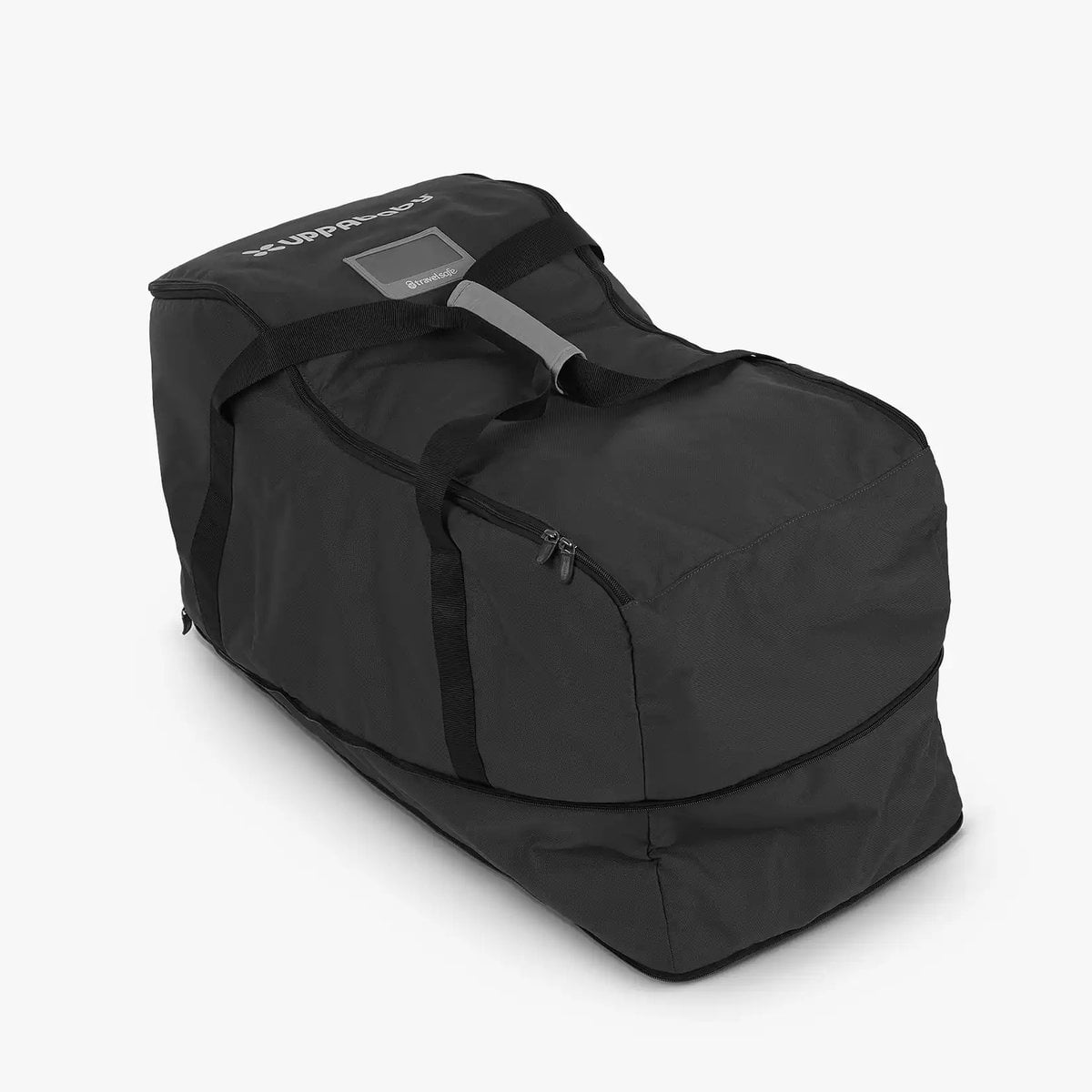
Luggage-grade travel bag designed specifically for the UPPAbaby Mesa and Aria (every model year).
Includes UPPAbaby's TravelSafe damage protection: Register before traveling, and they'll cover your seat if it gets damaged in transit.
- Check seat with confidence thanks to TravelSafe damage protection from UPPAbaby (register before traveling)
- Fits every Mesa and Aria model ever made
- 4 year warranty
- Only worth it if you own a Mesa or Aria
- Outgrow the infant seat; outgrow the bag
Don’t have one of those brands but want a bag to at least make it easier to carry your car seat onto the plane or to gate check it once you carry it through the airport? That’s where the J.L. Childress backpack comes in.
It fits most infant and convertible seats, folds down to wallet-sized between trips, and frees up both hands at the gate. Buy two if you have two kids.
Cheapest gate-check protection. Not for cargo check (the one before security)!
Fits most infant and convertible seats, folds to roughly 6.5″ x 5″ x 1.5″, and the backpack straps free up both hands at the gate.
- Inexpensive travel accessory you'll use time and again
- Folds to roughly 6.5" x 5" x 1.5" when not in use
- Hands-free
- It's polyester, not crash-protective foam (gate-check, not cargo)
- A tight fit on the bulkiest convertibles

How I install on a plane (the version nobody tells you)
The first time I installed a car seat on an airplane, I had no idea what I was doing. There’s no flight attendant orientation (they actually aren’t allowed to touch them), the seatbelts aren’t quite like a car’s, and you’re doing the whole thing while six strangers wait for you to finish so they can sit down.
Here’s the version I wish I’d had in writing.
- Book a window seat. The FAA requires car seats to be installed in window seats (or the middle of a wide-body center row) so you’re not blocking another passenger’s emergency egress.
- Avoid bulkhead, exit rows, and inflatable-belt seats. Bulkhead and exit rows often have fixed armrests, and some airlines use inflatable seatbelts in bulkhead or premium rows that can’t accommodate a car seat. Spirit Airlines uses them throughout the plane, so I just don’t fly Spirit with car seats.
- Lift the armrest before you install. Almost every economy aisle and middle armrest lifts up. You install with it up and leave it up for the flight.
- Run the aircraft lap belt through the belt path. No LATCH on planes. Just the lap belt, threaded the way the seat manual shows.
- Confirm the angle. Match what your seat requires.
- Snug test. One inch or less of movement at the belt path. If it’s loose, kneel in the seat and tighten the belt.
Cabin width is the other thing nobody mentions. The FAA recommends car seats 16 inches wide or less to guarantee fit in any economy seat. Almost no full-featured infant seat meets that. Most modern infant seats run 17 to 18 inches wide; most domestic economy seats run 17 to 17.5 inches between the armrests. With the armrest up, that’s almost always enough on a mainline carrier. On regional jets and ultra-low-cost carriers, it’s tighter.
If you fly a lot and want to remove the cabin-width question entirely, that’s where the Wayb Pico (for 2+ kids) shines: it’s 14.75 inches wide and folds into the overhead bin.
Real talk on lap-infant travel
I’m gonna say the hard thing because I’d rather you hear it from a friend than read it in a tragedy. Babies under 2 are legally allowed to fly on a parent’s lap for free, and a lot of families do it. I’ve done it many times. And also . . . the FAA strongly discourages it for one reason: in turbulence or a survivable crash, a parent cannot physically hold onto a baby.
That’s not a guilt trip; it’s physics, and while uncommon, it does happen.
And look, I’m not here to tell you what to do. Buying an infant a seat is expensive and you may wear them the whole flight anyway. So this is your call!
I’m here to make sure you know the actual recommendations and the reasons behind them before you decide. Many of us have flown with lap infants. Many of us will fly with lap infants again. And many of us, once we’ve read enough on this, end up buying the seat. There’s no wrong answer here that doesn’t come with information.
Because in reality, do most flights have dangerous turbulence? Nope. Do most flights end in a survivable crash? Absolutely not. Most flights are uneventful and fine for whatever you choose. But knowing the recommendations and reasons behind them lets you do a quick cost-benefit analysis so you can make the right choices for your family!
Why trust us?
I’ve spent 6+ years traveling with babies and toddlers. I’ve used BabyQuip 30+ times, tested every travel seat I recommend, and made every mistake at least once. I’ve also pressure-tested every claim here because I’m safety-conscious like crazy and double check all my options against the latest safety recommendations and consult with CPSTs before finalizing decisions.
Plus, I mine experiences and opinions from my vast Undefining Motherhood community. No holds barred, I tell you what actually happens on travel days, not just what looks good in a product photo. Because I’ve taken young kids all over the US and to 5 different countries, so I get it. Like really get it. Nothing in this article was sponsored. The old version was. This one’s all me.
Car seat rental FAQs
Yes. Most rental car companies offer seats at the counter for $10-15 per day, but quality is inconsistent. Peer-to-peer services like BabyQuip deliver clean car seats directly to your airport, hotel, or vacation rental. That’s the rental option I trust.
It depends. Rental car company seats are a real safety concern because you don’t know the history, cleaning, or condition. BabyQuip rentals are meaningfully safer because moms own and care for the seats and replace any seat involved in a crash. The safest option is always your own seat.
Yes, and you should if you can. Rental car companies cannot legally refuse your own seat. Do a fresh install in the rental car; don’t assume your install at home translates to a different vehicle. Seats with rigid LATCH make this much easier.
Usually, no. While it’s free, damaged seats may not protect your child in a crash. Check your carseat manufacturer’s instructions on checking seats. Some say never, others say only in original box, and some make brand-specific travel bags with warranty coverage for airline damage.
The bottom line
If you don’t want to take a seat on the plane, BabyQuip it. If you want a seat on the plane, my top picks are:
- Graco GoMax for newborns through 32 inches
- Wayb Pico for kids 2 and up
- Cosco Scenera Extend if you want to spend less than the Pico (fair)
- If your car seat is heavy, attach it to a cart so you’re not carrying it. Then install it on the plane or toss it in a gate-check bag so it’s protected.
And friend, listen: you can follow all the family travel tips, but there’s no version of travel day with kids that’s easy. There’s only the version where you’ve done the thinking ahead of time, packed the right things, and given yourself permission to be a little slower at the airport. The right gear doesn’t make travel days magical, but it does mean the gear stops being the thing that ruins them.
Go have the trip. You’ve got this!
More Articles that Might Interest You
- Travel games for kids
- Montessori toys for travel
- Diaper bag essentials (great for packing before a flight)
- Best diaper bag backpacks (for hands-free travel)