
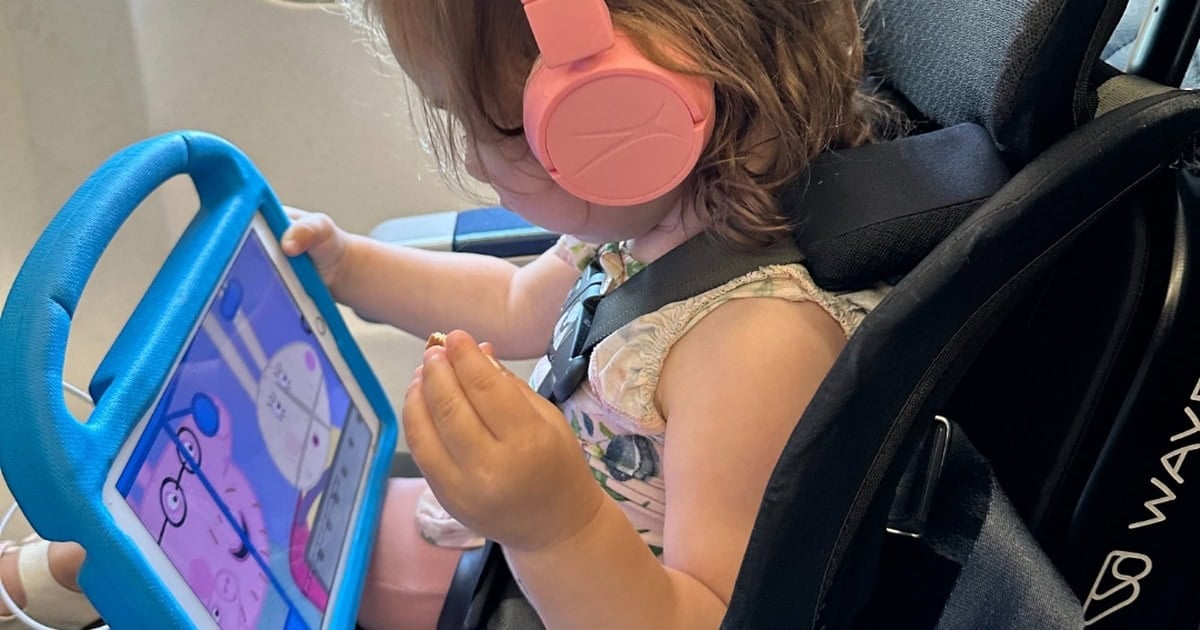
If you’re looking for toddler travel tips because you get anxious just thinking about that upcoming trip, I’ve been there and have good news. As a battle-hardened mom who’s played the toddler travel game for years, I promise (scout’s honor): there are ways to make traveling with a toddler way easier.
Let’s start with where you are right now. When you think about your upcoming trip, what gives you heart palpitations?
- Figuring out how to fly with a car seat?
- Airport security, the gate walk, or figuring out how you’ll carry the car seats?
- What’ll happen when your little one’s stuck on a plane?
- Having the gear you need once you arrive?
Quick self-assessment: Where did you stop breathing a little? That’s where to focus your prep (I’ll give tips and the best toddler travel essentials for each concern).
Because truth is, friend, relief probably isn’t going to come from 20 new pieces of toddler travel gear or a 30-page printable some influencer’s offering. You’ll breathe deeper when you have a solid plan for the parts of toddler travel that stress your family. (Good news! I’m here to help.)
I’ve been traveling with kids across continents for nearly a decade, and I’ve learned the plan should begin with your family’s stress points, not someone else’s packing list.

This site contains affiliate links, meaning that we earn a small commission for purchases made through our site. We only recommend products we personally use, love, or have thoroughly vetted.
How to Build Your Toddler Travel Plan
Now before you get too excited or nervous, please know this “plan” isn’t actually a detailed spreadsheet or Pinterest-worthy PDF. It’s a quick way to stop researching everything and solve the parts you’re most stressed about. A sort-of choose-your-own-adventure novel, if you will.
Pick your path, make your plan, feel relief. Then move to the next stress point if you’re nervous about all of it (hey, it’s me!)
For the mom who just needs to know where to start:
- Car seat stress: Build your car-seat travel plan
- Airport anxiety: Figure out your airport plan
- Plane meltdown worry: Set up the carry-on
- Destination gear: Plan destination gear
- Packing dread: Use the packing timeline
Flying with a Toddler
When it comes to flying with a toddler, there’s so much that can make your head spin. So we’re breaking this down into simple decisions that’ll make your life easier. Scroll to the one you need to plan first to feel the most relief.
Here are the basic decisions you’ll need to make, with quick click links to get what you need:
I’ve done it more times than I can count, tested all the toddler travel essentials, and I break it all down for you here.
Decision 1: Lap child or assigned seat
If your toddler’s under the age of two, chances are good you have the option to add them as a lap child. Many families love this option because it saves the cost of an extra ticket and it’s great for kids who’ll sleep on you.
From a safety perspective, though, it’s really not recommended. The FAA is very clear: the safest place for a child under 2 is in their own seat in a properly-installed, FAA-approved car seat.
Two quick things to discuss here:
- The safety reasons the FAA, AAP, and CDC all suggest installing a car seat (or CARES harness) on a plane
- The real-life pro/con list I know you’re weighing
Why do all the major authorities say to give a child their own seat on a plane?
This has been the guidance for years, but it’s received a lot more attention since the 2023 Lufthansa flight that experienced crazy turbulence. Unexpected turbulence is exactly why adult arms aren’t an approved restraint for little ones on a plane.
When turbulence happens, it can be sudden, and in severe instances, parents won’t have the physical ability to properly restrain their child, which can lead to severe injury, or worse.
Why do so many parents choose to have a lap child if it’s not “safe”?
Well, a lot of reasons. It’s:
- Cheaper (no extra ticket)
- Often easier (less to lug through the airport and install on the plane)
- Babies & toddlers often want out of their seats on planes anyway
- Severe turbulence is rare (but it does happen)
So what should you do?
This is entirely your decision, but I want you to know there’s no judgment either way. I, personally, have done both. Typically, I have felt better and had a better flight experience when my toddler had their own seat.
But ultimately, it’s a cost-benefit analysis only your family can make.
If I absolutely had to give my opinion, I’d say to buy them a seat and install an FAA-approved car seat because who am I to disagree with all the experts? (I’m not, and I won’t.)
What I will also say is this: every family makes different choices for different reasons, and no matter what your decision, the fact that you’re even looking this up shows me you’re a good, loving parent who’s doing your very best. Bravo!
Decision 2: Flying with a Car Seat: Should I take a car seat on the plane?
If you’re flying with a toddler and need a car seat to your final destination (am I the only one who hears the plane train voice saying these words?), you’ve got 3 reasonable options.
- Bring an FAA-approved car seat and install it on the plane
- Check your car seat (safely, more on that below) and have a lap child or use a CARES harness for the flight
- Rent a car seat at your destination (again, safely. Again, more on that below.)
Let’s dive into what each of these options looks like in real life.
Option 1: Bring and use your car seat on the plane
This is my preferred option, but I won’t pretend there aren’t drawbacks. Here’s what you need to know.
Pros
- Safest option: car seat stays with you, child is safely secured on the plane, and you don’t have to worry about the safety of car seat rental
- A familiar car seat often keeps your little squirm worm more comfortable and contained
- Solves the destination-car-seat problem in one move
Cons
- It’s an extra thing to carry through the airport (find suggestions on how below)
- Installation takes extra time during the most overloaded moments (boarding, stroller fold or gate check, unloading carry-ons, getting kids in seat, putting bags overhead, and a line behind you)
Things to Know
- Not all car seats are FAA approved, though most are. Check for a label on your seat that says “This restraint is certified for use in motor vehicles and aircraft.”
- You can also Google it; just make sure you get the information directly from your manufacturer’s website and not some rando online like, say, me.
- Installing a seat on a plane is totally different than installing it in a car. (Check your car seat’s manual and look for brand-issued video tutorials so you’re prepared before the moment of install.)
- Car seats can only be installed in window seats to maintain easy evacuation routes. Plan your seats accordingly (which might mean avoiding airlines that don’t let you select seats in advance.)
- Check the class you’re flying on your specific airline. All airlines allow car seats in economy; some allow them in premium economy; few allow them in first or business class. My understanding is that this is about the size and angle of the airplane seat and how it impacts safe installation of a car seat.
- Only certain airlines guarantee seating a parent with a child under 12. Click here for a list of airlines that promise to seat you with your kiddo.
Note
No convertible swivel seats are currently approved for airplane use.
How to get a car seat through the terminal
Most people’s hesitation with packing a car seat is carrying it through the terminal with all the other ish that’s required when you’re traveling with a toddler.
The bummer: It’s an extra thing to carry.
The win: You have the car seat you already know and trust with you, which brings a lot of peace of mind.
To get your car seat through the terminal, there are a few options:
- Use a rolling cart (more info below)
- Use a belt strap to connect the car seat to your suitcase
- Bring a car seat travel bag (some are backpack style; others have wheels)
Car Seat Dollies/Rolling Carts
A car seat dolly allows you to connect your seat to a rolling cart that folds down easily to fit in the overhead bin. Here are two easy options.
Britax Car Seat Travel Cart
There are two things I really love about this travel cart: it’s from a reliable brand I love and trust, and it uses LATCH attachments, making installation super easy.
For the mom who wants the car-seat airport plan to be click in, roll out, done.
It’s the faster choice when you don’t want a strap system to slow down the line.
- Clicks on with LATCH connectors
- 5 to 100-pound listed load range
- Fast, tool-free setup
- Needs accessible LATCH connectors
- Forward-facing only
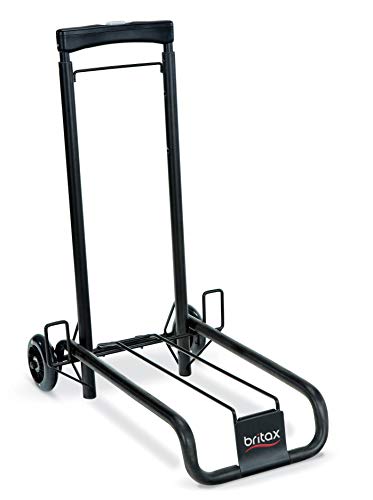
The one drawback to the latch feature is that the base of the cart doesn’t cover really wide seats, which can leave them a bit wobbly.
Belt-Attachment Car Seat Dolly
If your seat is wider or you need a lower price tag, this dolly uses a strap to connect your car seat to it.
For the family whose car seat is wide and needs a belt to be carried on a dolly through the airport.
It’s the practical, lower-cost route when your particular seat needs a different airport plan.
- Works without LATCH connectors
- 100-pound listed load capacity
- Folds to 15.7 × 10.6 × 3.1 inches
- Four wheels for airport rolling
- Not universal (check your car seat first)
- Strap setup takes longer

It’s easy to use, but not as easy as the Britax’s LATCH system, so practice at home before you go.
Option 2: Check your car seat (Safely)
The good news: you can check your car seat before going through security (called cargo checking) for free. Wahoo!
The bad news: Unless you follow very specific rules (which differ by seat and manufacturer), you risk damaging your seat and voiding your warranty. Mega bummer.
Some manufacturers explicitly say not to cargo check their seats (again, check your car seat’s manual, or Google it and see if you can find advice directly from the manufacturer’s website).
Others make specific travel bags for different seats. (I’m looking at you, Nuna and UPPAbaby.)
And some manufacturers say you have to check the bag in the original box, which, well . . . First, who still has that? And second, who has the hands to carry it to the baggage check area when you have so much other stuff?
TL;DR on checking car seats: Check your manufacturer’s rules and, if at all uncertain, gate check it (meaning carry it all the way through the airport to your gate, then gate check it in a padded travel bag.)
Quick Guide on Brand-Specific Travel Bags
Some brands do make travel-specific bags for their car seats, but whether they’re approved for cargo checking differs. Here’s a list of cargo-check approved travel bags by brand:
Nuna
Nuna’s boarding pass program extends the warranty on your seat by one year when using their bags for travel.
- PIPA Series Travel Bag
- Works with any combination of a US PIPA-series infant car seat and base
- Nuna Wheeled Stroller & Car Seat Travel Bag
- Includes most convertible seats; not for infant seats. Click here and go to “Features and Specs” for a list of compatible seats.
UPPAbaby
UPPAbaby’s TravelSafe® guarantee ensures your UPPAbaby gear is fully protected during travel.
Don’t see your manufacturer listed? Sadly, many make travel bags for gate checking (which are still super helpful to have!) But the options for cargo check (you know, the one before you go through security) are very limited.
Note
For warranties to be valid, register your car seat and travel bag before you travel.
How to secure your child on a plane without a car seat
If you want to make sure your child is carefully secured into a plane seat but don’t want to (or can’t) carry your car seat, the FAA specifically recommends using AMSafe’s Child Aviation Restraint System (CARES).
For the toddler with their own plane seat and parents who want to secure them without dragging a car seat through the entire airport.
It’s the flight-specific answer when the car seat is the thing making travel feel impossible.
- FAA-approved for U.S.-registered aircraft
- Fits children 22–44 pounds and up to 40 inches tall
- Only about one pound and packs into a small stuff sack
- Approved for every phase of flight
- Doesn’t fit children outside its 22–44-pound, 40-inch limit
- Doesn’t replace a car seat for ground travel

CARES is for a child who can sit upright alone, weighs 22–44 lb, is up to 40 inches tall, and has their own seat.
Option 3: Rent a car seat when you arrive (safely)
Car seat rental for travel is a hotly contested topic, so I’m going to touch on it very briefly here. If you’re interested in this option, head over to my guide on car seat rental for travel, which breaks down all the details and helps you make the best decision.
Here are the quick basics you need to know:
- Renting a car seat is risky because you don’t know its history (car seats that have been in certain accidents are no longer considered sound). That said, it also makes the airport luggage madness a lot easier
- Personally, I won’t rent a car seat from a rental car center. I’ve seen a lot of them up close and personally, and they often look VERY poorly cared for
- When I rent a car seat, I use BabyQuip . Their providers will often meet you at the airport for an extra fee, you know the exact seat you’re getting, and the provider knows the history of the seat.
Check out my full car seat rental guide for more details.
Best Travel Car Seats
In many cases, the easiest travel car seat is the seat you already own. As long as it’s FAA approved, you’re good to go. That said, those seats can be very heavy, and some seats aren’t approved, so there are instances where you might want a travel-specific car seat.
If you want a car seat built to make traveling with a toddler easier, there are two options I return to every time.
1. WAYB Pico
For the older, forward-facing toddler or preschooler. I used this seat with both of my kids until it expired, and hand to God, I cried when it did. I LOVE this seat! It’s lightweight, easy to use and install, and makes travel so simple!
8 lbs of aerospace-grade aluminum that folds to fit in most overhead bins.
Super easy to install on a plane. FAA and NHTSA approved, forward-facing only.
26.5-50 lbs and 33.5-45″ tall.
Strict 2-year minimum. The dedicated carry bag (sold separately or bundled) has backpack straps plus a trolley strap, so carry it on your back or sit it on top of a roller suitcase.
- Folds to 12" x 14.5" x 19" and fits most overhead bins
- 8 pounds total, the lightest forward-facing seat on the market
- FAA + NHTSA approved, 7-year lifespan
- Strict 2+ age minimum (please don't try to bend this one)
- Pricey
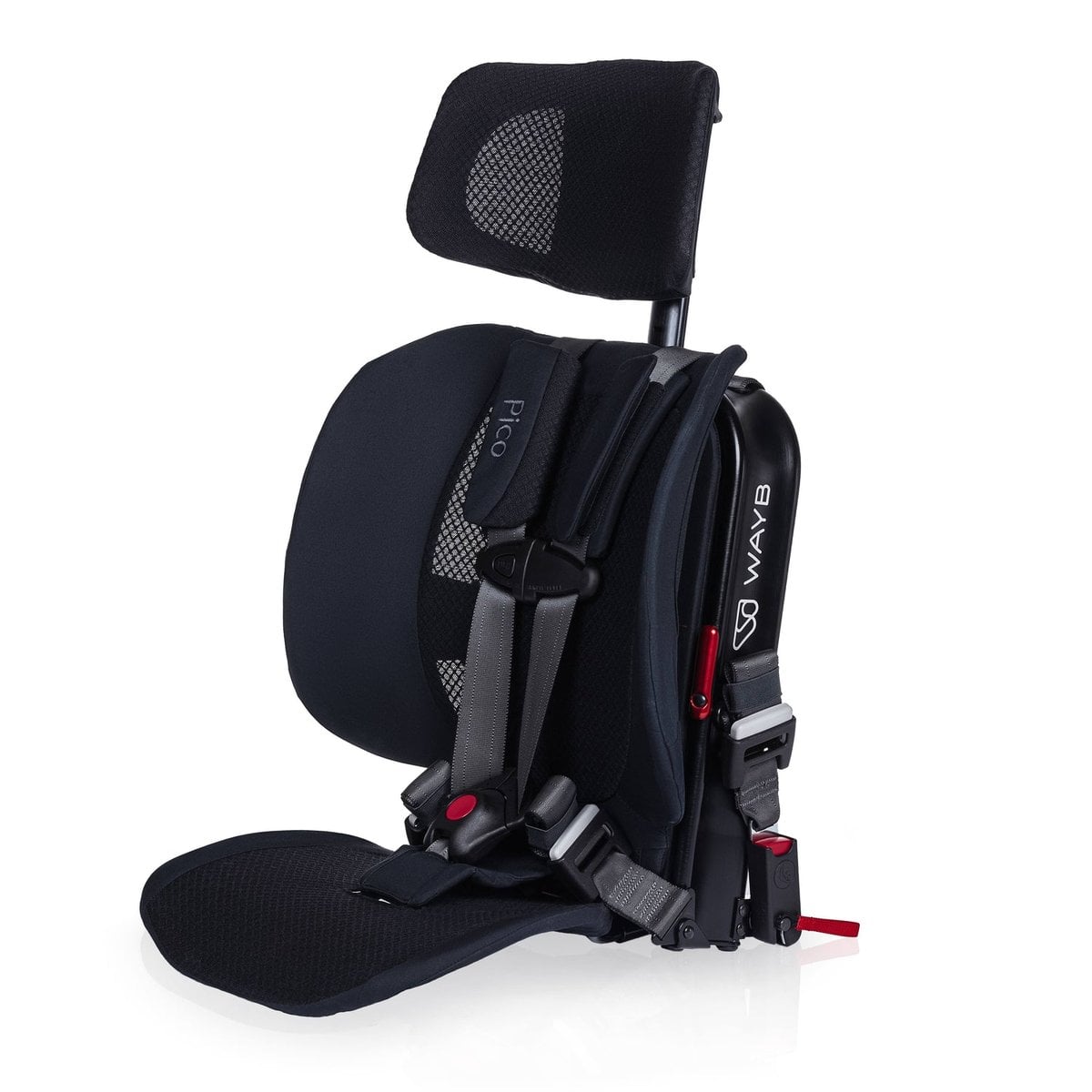
Parents sometimes worry because it looks so small, but it’s made from aerospace-grade aluminum, so it’s actually freakishly durable. If my youngest hadn’t been 6 lbs away from its weight limit, I’d have bought another one.
2. Cosco Scenera Extend
A lower-cost convertible seat that can cover a travel-specific need without Pico pricing.
Lightweight, inexpensive, and FAA approved.
At 8.5 lbs, it fits in a backpack-style gate-check bag, and the lap-belt install on a plane takes about 90 seconds.
Technically works for infants, but honestly best once baby has graduated from an infant carrier.
- Lowest price out there for a real convertible seat
- Easily fits in a backpack-style gate-check bag
- Rear-faces to 40 lbs, forward-faces to 50 lbs
- No bells, no whistles, no thrills
- No recline indicator; uses a printed line
- Requires more attention to install

This beats the Pico on price and the fact that it can be used either rear facing or forward facing. The material feels pretty thin, not what you’re used to from your everyday car seat.
Personally, I’m not a huge fan of its installation (I don’t find it easy to get tight). But I am a huge fan of a budget-friendly travel option that’ll last you for years!
Decision 3: How to Get Through the Airport With a Toddler
Getting through the airport with your toddler depends on a number of factors:
- Their age
- Their tolerance for walking
- How much stuff you’re carrying
- Your preferences
Typically, when flying with a toddler, I like to plan for them to need to be pushed or carried at least some of the time they’re in an airport. If you want to make sure you have a place to put your kiddo when their little legs are tired, here are your easiest options for getting them through the airport:
- Use a travel stroller
- Wear them in a carrier
- Bring ride-on luggage
If you have the right gear, I always suggest using what you already have first. If your everyday stroller folds without a fight and works where you’re going, it may be the best stroller for this trip.
If you have a carrier you already love, score. You’re golden.
But sometimes, the best toddler travel accessories make life so much easier. I recommend getting new gear if it’s in your budget and solves a real problem, like your stroller’s too heavy, you don’t want to carry a stroller, or you have a kid who wants up and down every 90 seconds.
Here’s the breakdown of all these options.
1. Use a stroller: the 5 best travel strollers of 2026
If your current stroller isn’t a good fit for travel and you travel regularly enough to justify having a travel-specific stroller, these are my top 5 picks.
They all check the major boxes I look for in a travel stroller:
- IATA compliant (meaning they fit in most overhead bins)
- One-handed fold
- Self-standing when folded
Pro Tip
If your travel stroller is different from your everyday one, size the harness to your kid and practice using it before you leave. All traveling adults should know how to fold it, unfold it, and strap your toddler in and out.
Best Travel Stroller Comparison Chart
| Stroller | One-handed fold | Use range | Weight | Relative folded size | Cost |
|---|---|---|---|---|---|
| Joolz Aer2 | Manual | Birth to 50 lb | 14.3 lb | Smallest | $$$ |
| Silver Cross Clic | Manual | Birth to 55 lb | 13.9 lb | Second-smallest | $$ |
| Ergobaby Metro 3 | Manual | Birth to 50 lb | 17 lb | Middle | $$ |
| Silver Cross Nia | Manual | Birth to 55 lb | 15.7 lb | Second-largest | $$$ |
| Graco Ready2Jet | Automatic | Starts at 6 months without a compatible car seat | 13.2 lb | Largest | $ |
The folded-size order runs Joolz Aer2, Silver Cross Clic, Ergobaby Metro 3, Silver Cross Nia, then Graco Ready2Jet. Pick for carry weight or destination-day storage; you rarely get both.
Joolz Aer2
For the frequent traveler who wants the airport part to feel less like a tiny logistics Olympics, this is the polished choice.
For the parent who wants every part of the travel stroller to feel easier . . . and travels enough to justify paying for that luxury.
It’s the polished pick for carrying bags, wrangling tiny humans, and getting through the airport with less gear friction.
- Lightweight (14.4 pounds)
- Birth to 50 pounds
- Newborn recline (use included baby net)
- Magnetic buckle
- No-rethread harness
- Price only justified if you travel regularly
- Small basket
- Fixed handlebar
- Decent (not great) on cobblestone

I love all the amazing upgrades built into this stroller. Worth it if you travel a lot.
Ergobaby Metro 3
An amazing option at a slightly more reasonable price, this stroller has everything you need to make travel day work smoothly and easily.
For the family who wants the useful premium features without the premium-stroller price. (It often goes on great sales on Amazon!)
It’s newborn-ready, cabin-compliant, and the only pick here with an adjustable handlebar. Upgrade to the Deluxe for a magnetic buckle, carry strap, upgraded materials, and added accessories.
- Moderate weight (17.1 pounds without accessories)
- Birth to 50 pounds
- Newborn recline (use with included nest)
- No-rethread harness
- Adjustable handlebar
- Forward-facing only without adapters
- Standard buckle (magnetic with Deluxe)
- Decent (not great) on cobblestone

A super easy option that rarely receives complaints. If you want a more premium feel, consider the Deluxe version.
Silver Cross Clic
When your own carry-on already feels heavy, shaving weight from the stroller is a real kindness to yourself.
For the parent who wants the lightest premium stroller of the group.
It keeps the newborn-ready, cabin-compliant features you want without making you carry extra weight through the airport.
- Lightweight (13.9 pounds)
- Birth to 55 pounds
- Newborn recline
- Magnetic buckle
- No-rethread harness
- Small basket
- Fixed handlebar
- Moderate on cobblestone
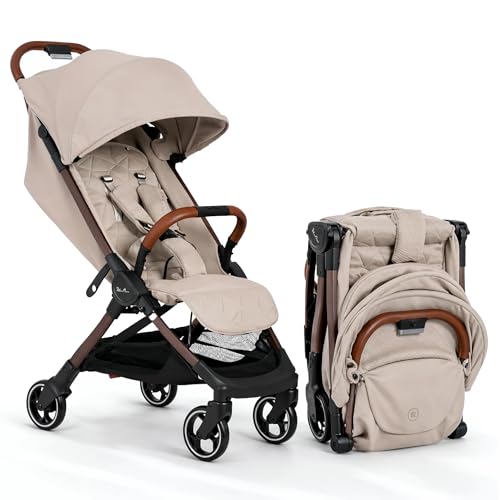
Silver Cross is known for luxury, and its strollers are no exception. Everything feels upgraded without much sacrifice.
Silver Cross Nia
A compact stroller that still gives the comfort and ease Silver Cross is known for.
For the parent who refuses to pretend a travel stroller doesn’t need to carry all the things,
It gives you the biggest basket in this group without giving up the cabin-friendly fold or premium details. Optional add: a folding bassinet! It still fits in most overhead bins with the bassinet attached!
- Light-ish weight (15.7 pounds)
- Birth to 55 pounds
- Newborn recline and optional foldable bassinet
- Magnetic buckle
- No-rethread harness
- 22-pound storage basket
- Pretty good on cobblestone
- Bassinet sold separately
- Fixed handlebar
- Premium price
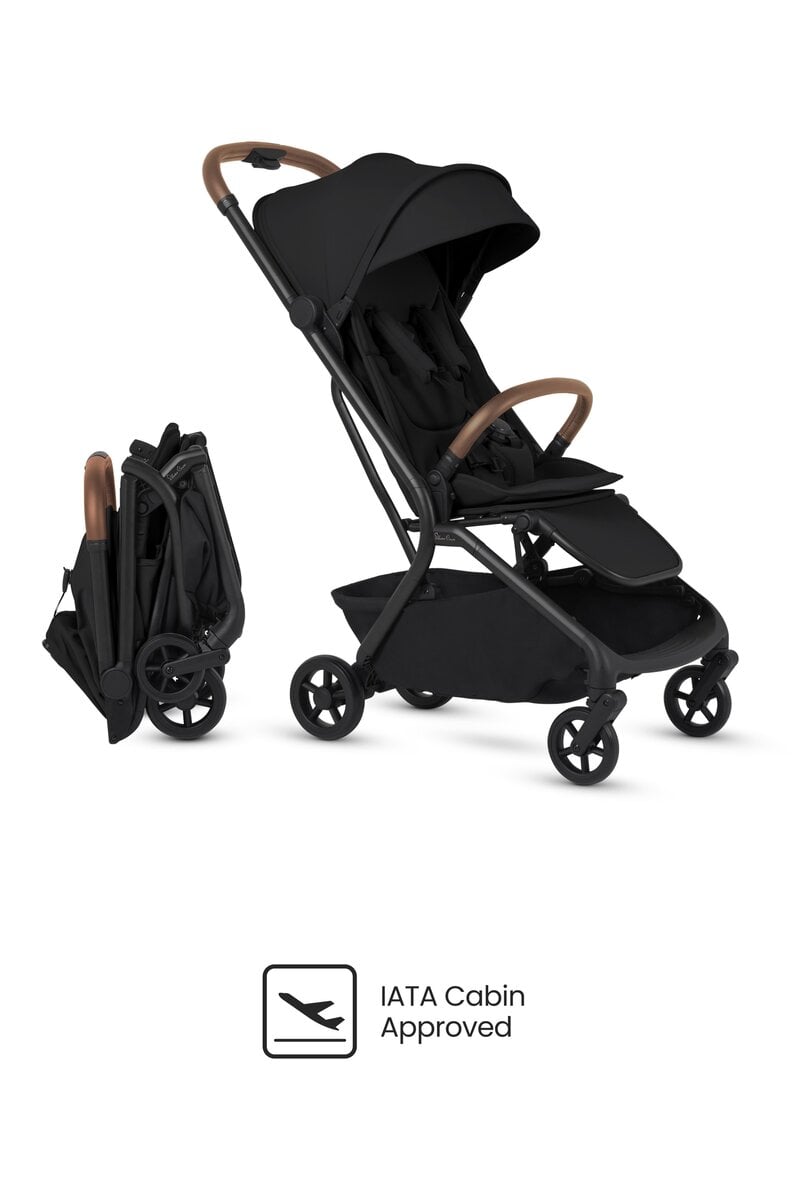
An amazing stroller option when you want everything to be easy and don’t mind a little added weight and size for better storage and comfort.
Graco Ready2Jet
The best everyday pick that doesn’t break the travel budget. If you travel regularly and can justify the higher prices above, then choose the best fit for you.
For the family looking for the stroller that automatically folds itself without blowing the travel budget.
It’s light, easy in an airport, and much less expensive than the premium picks. Just don’t expect the same buckle, harness, or terrain performance.
- Lightweight (13.2 pounds)
- Starts at 6 months without a compatible car seat
- Automatic one-handed fold
- Great value for the price
- Partial recline only
- Basic plastic buckles
- Re-thread harness
- Not ideal for cobblestone

But often, we just want simple, functional, at a price that doesn’t make us balk. This one absolutely fits that bill.
2. Use a carrier or hip seat
A carrier is amazing for getting your toddler through the airport hands-free (or one-handed if you go with a hip carrier.) For some families, it fully replaces a stroller. For others, it just gives another option. (And it gives you an easy way to walk them to sleep on the plane.)
If you wear your toddler,bring your favorite carrier and you’re all set. If not, here are my faves for travel, divided by type (full carrier, hip seat, toddler sling).
Ergobaby Omni Deluxe
For the kid who changes their mind every 10 minutes and a parent who wants a small fold with good lumbar support, this carrier is great to toss in your stroller basket or keep accessible in your carry-on.
For the family whose toddler changes their mind about being carried every ten minutes.
This is the carrier that can keep up with the whole trip and life outside it, instead of becoming another short-lived baby item.
- Fits 7 to 45 pounds
- Four carry positions (including back carry for bigger toddlers)
- No infant insert to pack
- Waist needs readjusting as your toddler grows
- Back carry takes more setup
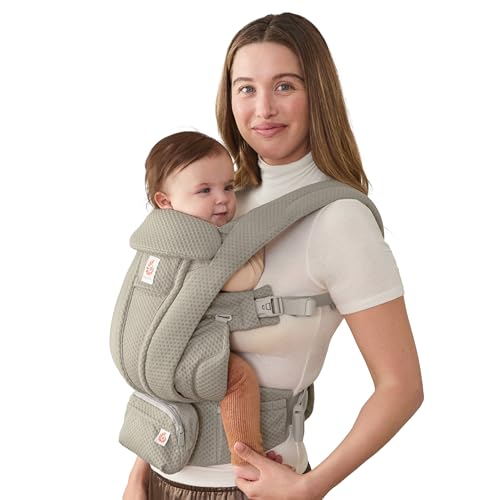
I love this carrier’s versatility without a wild price tier, and how easy it is to fit it to my kid and to me.
Tushbaby
My favorite option for a kid who loves to be carried on your hip. That was my daughter, and this thing was my saving grace when we traveled.
For the parent whose toddler wants up, down, and back up again before you’d finish fastening a full carrier.
It takes the weight off your arms, carries the diaper-bag basics, and gives tired legs a sturdy seat without trapping either of you in a full carrier.
- Up to 45 pounds
- Wide seat and built-in lumbar support
- Lightweight (less than 1lb)
- Five pockets + bottle holder
- Wipes clean and is machine washable
- Waistband extender available (adds up to 23 inches)
- Requires one arm around your child at all times
- Waistband must be very tight for real back support
- Structured seat is bulkier than a toddler sling
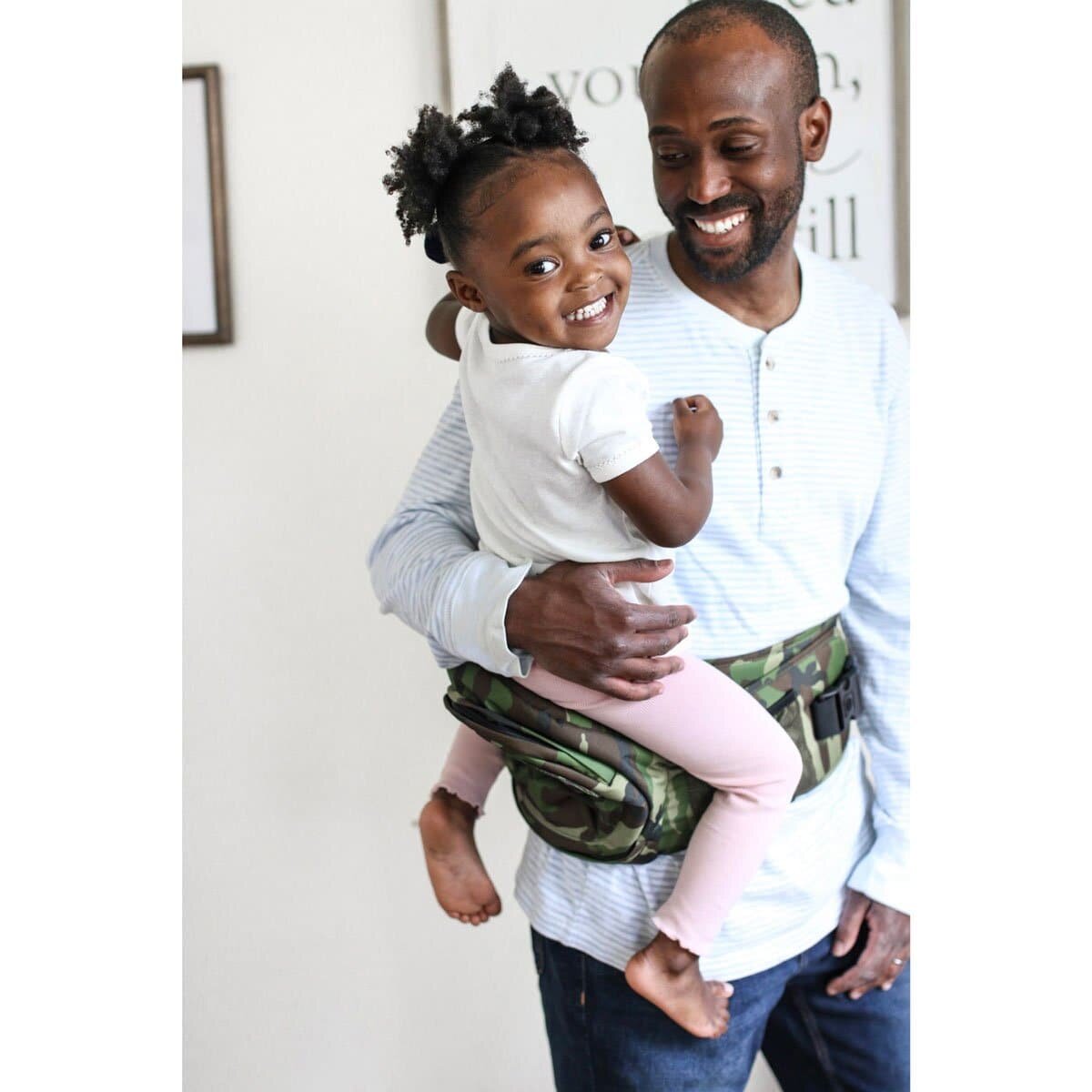
It’s basically a fanny pack-meets-carrier, and the ergonomics do make it a bit bulky to carry around. I love to velcro it to my stroller and go, and use the “fanny pack” part as a mini diaper bag so there’s less to carry.
Pro Tip
Tighten the waistband more than you think you need to.
Ergobaby Upsie Sling
For the up-down, up-down phase, a sling gives you a space-saving carrier option that still helps support your hips and back.
For the parent in the up, down, up again phase of toddler travel.
It’s a faster answer than hauling out a full carrier every time little legs suddenly quit.
- Fits 17 to 40 pounds (with full head and neck control)
- Quick hip carry for tired toddlers
- Compact one-shoulder sling
- Not for children without full head and neck control
- One shoulder gets tired on long carries

It doesn’t provide the same level of support as a full carrier or hip carrier, but it also takes up way less space and still really helps.
3. Use ride-on luggage for the gate walk
A ride-on bag can save the day when you don’t want to push a stroller through an airport. Here are my favorites for a full-sized carry-on with a seat and a toddler carry-on they can both pull and ride.
MiaMily Carry On Original
I love this for its durability, sturdiness, and ease as a regular carry-on that’ll also let your kid ride on top.
For the family who wants a real carry-on that also gets a tired kid through the airport.
It's the bag you're already packing, with a fold-up seat and safety belt ready when little legs quit.
Note: There are cheaper options on the market; I select this one because I trust it, but a well-reviewed alternative might be a great pick.
- Fits in most overhead bins
- Full-size 43-liter carry-on
- Built-in child seat and safety belt
- Seat supports up to 220 pounds
- Smooth 360-degree spinner wheels
- Heavy (9.4 pounds empty)
- Premium price
- Slower on carpet and uneven floors
- Use only on flat surfaces with adult supervision

There are tons of similar options out there. What stands out about the MiaMily is how sturdy and high-quality this bag feels.
Trunki
A great option for a toddler who’s ready for some responsibility . . . but not for doing all the walking yet.
For the family who wants to hand over a little responsibility while still giving little legs an out for when they're tired
Best for the older toddler or preschooler who can sit securely and understand the “feet up, hold on” part of the ride.
- Made for ages 3–6
- 110-pound rider limit
- Ride-on suitcase with tow strap
- Lightweight (3.8 pounds) and fits under many airplane seats
- Various cute designs
- Not for toddlers under 3

I love this for letting your kid pack it and pull it, but then having an easy seat when they get tired.
Pro Tip
Practice the “feet up, hold on” routine at home before the crowded-terminal version counts.
Decision 4: What to Pack in a Toddler Airplane Carry-On
When packing a carry-on for a toddler, I cannot emphasize one word enough: compartments. Nothing’s worse than opening a giant bag to search for the iPad charger and find a half-eaten snack bar smushed against it.
Here’s how I pack so plane-time is stupid easy. You ready?
1. The under-seat system
I keep 3 items per kid in the carry-on that get pulled out the second we’re on the plane:
- Travel organizer (goes under the seat)
- Snackle box (goes under the seat or in the seat pocket)
- Water bottle (goes in the seat pocket)
Travel Organizer
The best part of this formula is absolutely the travel organizer. I take one of these on every trip, one per kid and one for myself. In mine, I carry chargers, gum, hand sanitizer, alcohol wipes, water wipes.
In the kids, I pack a tablet, headphones, drawing pad, and toys.
Click here to see my favorite airplane travel toys for kids.
Keep the games organized with 10 compartments to keep everything sorted and easy to find.

Put it under the seat in front of the kid it belongs with and everything you need will stay at arm’s length.
Need more ideas for toddler travel toys? Our favorite montessori travel toys keep their little minds moving!
Snackle box
It’s a silly word, I know, but when you pack it full of shelf-stable snacks, your kiddo can snack throughout the flight, keeping them happier and in their seat for longer.
Water Bottle
This one probably doesn’t need its own section, but my anxiety can’t handle leaving it out when it got its own number above.
Carry an empty water bottle through security; fill it up once you’re in the airport. No spills!
Extras to Keep Overhead
When packing for toddler travel, expect delays in places like the airport and runway taxiing. Hopefully it won’t happen, but if it does, you’ll be prepared.
For me, that means having a few “extras” in a bag in the overhead bin:
- A few extra snacks
- A few extra toys
- A toddler outfit
- A parent shirt
- Wipes
- Diapers
If you want, you can also bring a small cooler with drinks and pouches, as toddler snacks are included in the liquids TSA allows you to bring on board. I love the PackIt freezable coolers for how small they are (just remember to freeze it before you leave).
Pro Tip
Allow extra time for security if you bring a travel cooler as they’ll need to check the items manually.
If your flight is long and you want your kids to be able to play, I love the Lusso Gear Tray Table Cover. It can be a seatback pocket for a tablet, or fold it up to hold toys or snacks so they don’t fall, all while avoiding tray table germs. (Only good if your kid has their own seat.)
2. The “don’t drop it on the floor” fixes
The fun of toddlers is how much everything falls to a floor, and when you’re in an airport or on a plane, we don’t need to imagine how icky that is.
These are my favorite toddler travel essentials for keeping things that should stay clean off nasty floors.
Busy Baby Essentials Bundle
Amazing for the plane and eating out while you travel, this bundle comes with a clean mat (I love it at restaurants) and tethers that you can use to hold things like sippy cups, toys, and more.
For the family who’s tired of watching the same cup, spoon, and toy hit the terminal floor.
This is the start here and stop piecing it together pick for keeping travel-day essentials within reach.
- Original Mat, Mini Mat, teether, training spoon, and wet bag
- Toy Bungee, Bottle Bungee, and six tether straps included
- Tethers also work on stroller and car-seat handles
- Mat doesn't always stick well to plane tray tables

You can also strap the tethers to stroller buckles so your little one doesn’t drop their water bottle or favorite lovey while you’re wandering down the streets of Barcelona. (Talking from experience here.)
Busy Baby Bungee Bib
I love bibs that catch food, but what I love about this one is that it gives you another place to anchor your tethers, including in a car seat on a plane.
For the mom who wants to contain the meal and the things her toddler will throw during it.
It keeps the feeding setup simple when restaurant floors, airplane seats, and rental cars are all in play. It can also be used to hold light toys and teethers on planes or in strollers!
- Bib plus two bungees
- Tethers hold a toy, utensil, or cup
- Rolls up small and is dishwasher-safe
- Large catch pocket
- Less adjustable than a strap-neck bib
- No storage case

It keeps a toy and utensil close, saving your back, your kids’ temper, and everyone’s sanity.
3. Headphones and tech
Taking a tablet to help keep your toddler entertained while traveling? Me too. Quick tip: Charge EVERYTHING before travel day, including charging banks you can put in your travel organizer for when a battery inevitably runs low.
Here are my favorite, lesser-known pieces to make headphones your toddler’s friend.
CozyPhones
These adorable, soft, toddler-friendly headphones can make screen time gentler because sensory-averse toddlers will actually wear them. (Usually. Try before you travel.)
For the parent whose toddler keeps pulling regular headphones straight off their head.
It makes screen time feel less like a negotiation, especially when you need one calm stretch of the flight.
- Wireless and wired in one (works with airplane screens when wired)
- Soft headband speakers with a 90 dB volume limit
- Travel bag included
- Wireless mode needs charging
- Toddlers love to unplug wires, then scream
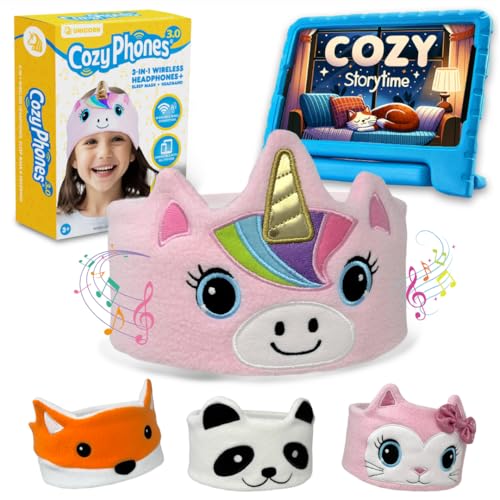
Wired is simplest because you don’t have to keep them charged or worry about whether the device comes unpaired. That said, toddlers love to pull cords, so having the wireless option is also great.
Just remember to charge and pair them ahead of time.
AirFly Pro 2 Deluxe
And speaking of wireless, you know what’s not fun? When your toddler sees Peppa Pig on the seatback, but your headphones are wireless and don’t plug in. Insert AirFly, which we use for kids and adults alike.
For the mom who’s finally found a show that’ll hold everyone’s attention, only to meet an airplane screen with an old-school headphone jack.
This is the make-the-seatback-screen-work-with-your-headphones adapter. Pricey, but great for toddlers who you know are gonna pull out a headphone cord and then scream about it.
- Works with airplane headphone jacks
- Pairs two Bluetooth headphones
- 25+ hours per charge
- USB-C cable included
- Needs charging before travel
- Reconnecting can be fussy
- Some setups have a slight audio delay

Charge it before leaving and it will save you when you need Bluetooth headphones to work with the seatback screen.
Pro Tip
Download shows and movies to the tablet before you leave because streaming may not be available when you need it most.
Sleep and play once you arrive
If you’re worried about having toys or how you’ll handle bedtime, this section’s for you.
You can use a lot of the same toys you took on the plane to entertain your kid while you’re on your trip. And if you need more, consider renting through a company like BabyQuip.
When planning for sleep, think about the anchors that are the main sleep associations at home.
- Keep the same routine
- Use the same sleep sacks or loveys
- Use white noise if that’s what they’re used to
A strange room is strange, sure, but that doesn’t mean sleep can’t be solid. And if you’re sharing a room with your toddler and you don’t do that at home, consider something like a SlumberPod to black out their sleep space and keep them from seeing you during the night.
Renting Gear you don’t want to travel with
If you’re going somewhere that can’t provide a crib or bed, bed rails, or whatever other gear you feel like you need, lots of baby gear rental companies also provide toddler gear.
I love BabyQuip for all things sleep, and for trips where I need things like toys, bed rails, bathroom stools, or when I didn’t bring my own stroller.
BabyQuip is a North America-wide baby gear rental service that delivers clean, inspected gear straight to your hotel, rental property, or airport. Their "Quality Providers" are real parents running small local businesses who deep-clean every item between rentals and know each seat's full history when renting car seats.
- Real humans cleaning real seats with real accountability
- $1M liability + damage protection if you want it
- Drops off at your door so travel day is just . . . easier
- Each provider is independent, so always check their reviews
- Can be pricey, but often worth it

I cannot tell you the relief, after a long day of travel, of arriving at a ski trip with an overtired Jack to find a push toy and a box of toys, plus a full-size crib with a comfortable mattress, monitor, sound machine, and humidifier already set up.
It was 7 years ago, but I can still feel that relief in my bones. Renting doesn’t remove every decision and can be expensive, but it can also save you from overpacking and make the trip go much more smoothly.
The Packing Timeline That Actually Works
I love to procrastinate on packing, but since having kids, I’ve learned that is the number one way to stress myself to death and leave me exhausted and overwhelmed before travel even starts.
This is the packing timeline that saves my life every. single. trip. (Ask me how many times I’ve skipped it, and I’ll tell you how many times I’ve regretted it.)
Two days before
- Download shows, movies, audio, and any kid app you’ll want without Wi-Fi.
- Charge tablets, headphones, AirFly, and battery packs; check each one actually turns on.
- Practice the car-seat plan, including attaching a dolly or installing the seat if it’s traveling with you.
- Adjust the car-seat straps and headrest now, not at the curb.
- Practice the stroller fold, unfold, and harness. Set the straps for your child, and make sure both traveling adults know the release.
The day before
- Pack the under-seat system first, then leave it alone. Charged devices go straight into it.
- Fill the snack box with shelf-stable food and put the empty water bottle in the carry-on.
- Set out documents, medications, chargers, and the clothes you want on the plane.
- Make a small “new stuff” bag for the airport or a delay. The UM village swears by dollar-store puzzles, fresh pens, a few stickers, and familiar toys presented in a different way. Newness is doing the work here, not the price tag.
Travel day and the airport
- Buy a couple of extra snacks after security if the timing looks ugly.
- Fill water bottles after security, then keep the plane-day bag beside you at the gate, not buried in a hard-shell suitcase.
- Expect the stroller, cooler, milk, and toddler to each have their own screening moment. Leave enough time for that small parade.
- Save your most reliable snack, show, or surprise for the final stretch. That’s when a travel day gets loud.
Don’t fill half your suitcase with diapers, wipes, and snacks unless you’re going to the middle of nowhere. A grocery-store stop after you land is probably needed anyway. Let the destination carry some of that weight.
Why trust us?
I’ve been traveling with kids across continents for almost a decade. By age 4, Jack had taken 6 major trips, including 2 transatlantic flights, and he had 4 stamps in his passport. Just as traveling with him got easier, I had my daughter.
She requires much more planning and entertaining, so the systems I thought worked before have been optimized to a T. I’ve packed too much, planned too tightly, folded all the strollers, installed all the seats on planes, and created systems that actually work.
Toddler Travel Tips FAQ
The window from 18 months to 2.5 years is the toughest for most families because toddlers have short attention spans and the constant need to move. A few things that help are rotating snacks, toys, activities, short walks, and downloaded shows.
Drive when the distance, breaks, and sleep timing feel manageable. Fly when a long drive would use up a full day or leave everyone overtired. The better option is the one that gives your family the most workable travel day, not the one that looks easier on paper.
Look for the label saying it’s certified for use in motor vehicles and aircraft, or check the seat’s manual. Practice the installation before you leave home because plane installation is different from installing it in your car.
Yes, when they’ve got their own seat, can sit upright alone, weigh 22–44 lb, and are no more than 40 inches tall. CARES is for the aircraft only. Make a separate plan for the car after landing.
Keep snacks, toys, headphones, and tablets in a travel organizer under the seat in front of your child. Have extra food, wipes, diapers, a toddler outfit, and a parent shirt in a bag in the overhead bin.
Yes. TSA exempts breast milk, formula, and toddler drinks and snacks from the usual liquid rule. Declare them at the start of screening and allow a little extra time for separate screening.
The bottom line
Start with the place where you stopped breathing a little. Solve that first.
Then, set the carry-on up so you can reach it, make the car-seat plan early, and leave room for naps, grocery-store snacks, and the version of the trip your kid can actually handle so you can stay sane.
My biggest tip of all: don’t plan the trip you’d have taken before kids or hold your trip to the same standards. It will be different, and that’s okay.


4 thoughts on “Toddler Travel Tips: What Actually Works (Gear + Timeline)”